.webp)

If you pick the right SDS drill bit maker, you'll have a partner who knows your production needs, the problems you face with materials, and your quality standards. A trustworthy provider uses advanced metals, precise manufacturing, and long-lasting materials that have been shown to work well in tough situations like concrete anchoring and brick penetration.
The best makers have both technical know-how and flexible production capacity, so your business will never have to stop working because of broken tools or delays in getting supplies. We make enterprise-grade SDS drill bits at Danyang Ebuy Tools using quality 40Cr alloy steel and tungsten carbide tips. Our 77,000-square-meter plant makes 150,000 pieces every day to meet demand around the world.
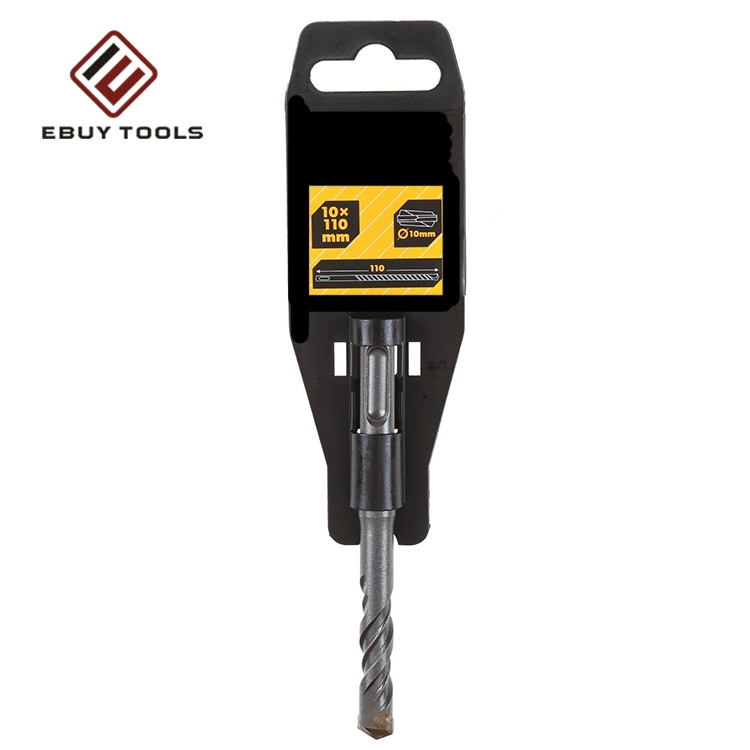
Understanding SDS Drill Bits and Their Market Demand
What Makes SDS Technology Essential for Heavy-Duty Drilling
The Slotted Drive System changed the way brickwork was drilled by fixing a problem that had been going on for a long time: chuck slippage during high-impact operations. When drilling through reinforced concrete, the strong shocks made traditional three-jaw chucks lose their grip. Our SDS design has two open grooves for drive keys and two closed grooves for locking ball bearings. This lets the bit move along its length while keeping its spinning force. This detached hammering action sends all of its power to the work area instead of losing it on friction inside the chuck. Because the tool takes pressure well, operators get tired much less often, and the risk of damaging the chuck goes down a lot.
SDS-Plus vs. SDS-Max: Matching System Capacity to Application Requirements
Knowing the different types of shank designs helps buying teams choose the right tools. While SDS drill bits in the Plus category have a 10mm shank width and can handle holes up to 1-1/8 inches in size, they are best used for installing electrical conduit and light structure work. Different types of SDS-Max have an 18mm shank and can drill holes bigger than 2 inches.
This is needed to put HVAC systems through double-wythe brick walls or big anchors. The metals are a little different. Our SDS-Max bits are made of 42CrMo alloy steel instead of 40Cr, which gives them more rotational strength for heavy-duty continuous drilling. Both methods keep the shank hardness at HRC 48–52 and the carbide tip hardness at 89+ HRA, so your whole collection of tools will be the same.
Growing Industrial Demand Across Manufacturing and Construction Sectors
Demand for reliable brick drilling options is still being driven by building work around the world. For commercial building projects, thousands of anchor points made of reinforced concrete are needed. Each one needs to be perfectly round to meet the load requirements of the structure. Automotive and aircraft companies are using concrete flooring systems more and more, which need to have anchors installed on a regular basis so that machines can be placed correctly. Structured penetrations are important for the mold and die business because they let utilities run through production sites. Distributors that work with these markets need sources that can keep quality high even for large orders and offer technical help for unique uses.
Key Criteria for Choosing the Best SDS Drill Bits Manufacturer
Production Capacity and Supply Chain Reliability
Your activities rest on having access to tools all the time. Judge producers by how much they can make each day and how big their facilities are. Our production plant is 77,000 square meters and has 319 trained workers who make about 150,000 pieces every day. This scale makes sure that we can handle big orders without having to extend wait times or lower the quality during times of high demand. Procurement managers should check to see if possible suppliers keep enough raw materials on hand and have backup production lines ready in case equipment breaks down, which wouldn't affect your shipping schedules.
Material Quality and Metallurgical Standards
The choice of material and the accuracy of the heat treatment make the difference between a bit that lasts 50 holes and one that lasts 500 holes. For the bit body, high-end makers use 40Cr alloy steel that has been heat-treated to HRC 48–52 for the best resistance to rotational stress. The carbide cutting tip should be at least YG8C grade and be brazed with copper alloys that can handle temperatures above 1100°C. This keeps the tip from coming off when drilling for a long time in rough concrete with silica aggregates. Induction brazing, not just torch brazing, is used in our production process for every SDS drill bit. This makes a molecular bond between the carbide and steel that can withstand changes in temperature.
Certification Standards and Quality Assurance Protocols
Following foreign standards will keep your business from having to deal with liability problems when anchors fail. Look for companies that make SDS drill bits that have PGM approval. This makes sure that the geometric tolerances are correct, which is important for installing anchors. Compliance with ANSI B212.15 ensures consistent width and concentricity, which stops holes that are too big and weaken the anchor's hold. Random samples from each production batch are tested for hardness, concentricity, and carbide bonding power before they are shipped as part of our quality control system. ISO approval means that quality management is being done in a planned way, which lowers the difference between batches that leads to unexpected tool failures on the job site.
Research and Development Capabilities for Custom Solutions
Catalog goods don't always solve problems that are specific to a certain application. Manufacturers with dedicated research and development (R&D) teams can make custom shapes for unique materials or change the designs of flutes to better remove dust in certain situations. We've made unique solutions for aerospace builders who need to drill titanium-reinforced concrete and automakers who need longer bits for robot-mounted drilling systems. True manufacturing partners are different from simple product suppliers because they can make changes to prototypes quickly and turn unique designs into mass production.
Procurement Tips: How to Buy SDS Drill Bits Effectively
Defining Your Application Requirements and Volume Needs
Accurately assessing your drilling possibilities is the first step to successful buying. When MEP workers do pass-through drilling in formed concrete walls, they need long bits with aggressive flute shapes to get rid of the slurry. When structural engineers put in expansion anchors, they need shorter bits with precision-ground sizes that meet the anchor manufacturer's requirements. Figure out how much you need each month by looking at when your projects are due. Placing a lot of small orders will raise your management and shipping costs, and having too much goods will tie up your capital. We help our clients get the best deal on their orders by looking at how they've used our products in the past and what projects they have coming up.
Sourcing Strategies: Direct Manufacturing vs. Distribution Channels
For people who buy a lot, buying straight from manufacturers can save them money. You can get technical help from the engineers who developed the goods, ask for small changes without having to place huge orders, and you don't have to pay for distribution profits. Regional distributors are useful because they have local goods, faster shipping times, and already have relationships with your buying staff. Hybrid methods work well: keep a smart relationship with a maker for major supplies and use local distributors for quick replacements. Our approved dealer network makes sure that the SDS drill bits are real and that the warranties cover them, and it also makes it easy to find dealers in your area.
Negotiation Strategies and Contract Considerations
Long-term supply deals are good for both parties because they make sure that capacity is allocated and demand is reliable. You can usually get 15–25% cost savings by negotiating prices based on annual volume agreements instead of individual purchase orders. Include terms about quality complaints, how to return defective batches, and the ability to change the delivery plan. Payment terms affect cash flow. If longer terms help your working capital, you may be able to afford slightly higher unit prices. Ask for performance promises that spell out the minimum number of holes that must be present under certain conditions for each SDS drill bit. This will set objective standards for quality talks instead of emotional ones.
Maintenance, Sharpening, and Prolonging the Life of Your SDS Drill Bits
Proper Usage Techniques That Extend Tool Longevity
The life of an SDS drill bit depends a lot on how it is used and how well it is maintained. Instead of pushing the bit, keep a steady mild pressure on it. Too much force creates friction heat that doesn't speed up penetration. You should not depend on feed pressure, but let the hammer device do the work through contact energy. Make sure that the impact energy of your rotating hammer is right for the size of the bit. Users who use weak tools tend to apply too much pressure, which speeds up wear. During deep holes, pull the bit out every so often to clear the flutes of dust that has built up. This will keep friction from building up and overheating the carbide tip.
Cleaning, Storage, and Inspection Best Practices
When you mix concrete dust with water, you get an acidic paste that hurts bit shanks and makes rust grow. Use compressed air to clean bits right away after using them, making sure to get rid of all the material in the flutes and shank holes. Put a thin layer of tool oil on it to keep it from rusting while it's being stored. Instead of leaving bits lying around in toolboxes, store them vertically in racks made just for them. This way, the carbide tips won't get damaged by metal surfaces. Before each use, check the bits for cracks in the carbide bonding, mushrooming on the shank end, and too much wear on the cutting edges. Taking broken bits out of service stops major fails that hurt workers or damage workpieces.
When Replacement Outweighs Attempted Refurbishment
When compared to metal twist drills, SDS brick bits don't need to be sharpened very often. The shape of the carbide tip is carefully planned when it is made, and field sharpening usually removes material in an uneven way, causing an unbalance that leads to vibrations and faster wear. If the drilling speed slows down significantly or the bit bends to the side when it hits hard rocks, it is cheaper to buy a new one than to keep using the old one. Instead of using set hole counts to figure out when to replace the concrete, use performance measures instead. Drilling conditions are very different between business structural concrete at 5000 psi and domestic concrete at 2000 psi.
Conclusion
To find the best SDS drill bit manufacturer, you need to weigh technical specs, production capacity, quality guarantee, and the chance of forming a long-term relationship. The best producers use advanced metalworking techniques and scalable production systems to make sure that even when they have a lot of orders, they always do a good job. At Danyang Ebuy Tools, we make sure that your processes stay productive by using fine YG8C carbide tips, 40Cr alloy steel construction, and strict quality control. With a 77,000-square-meter facility that can make 150,000 pieces per day, we can help you with even the most difficult projects by providing a steady supply and using our technical knowledge gained from years of working in the aerospace, automobile, and precision machining industries.
FAQ
What distinguishes SDS drill bits from standard masonry bits?
The Slotted Drive System has special shank holes that let the bit move longitudinally inside the chuck while keeping the rotational power transfer. This decoupled system keeps the chuck from slipping during high-impact drilling and makes energy transfer much more efficient than with standard three-jaw chucks. During long concrete drilling jobs, operators get less tired and there is a much lower chance that the chuck will get damaged.
How do I determine whether my application requires SDS-Plus or SDS-Max?
SDS-Plus bits with 10mm shanks can drill holes up to 1-1/8 inches wide and are good for electrical duct work, light anchoring, and general drilling in concrete. Different types of SDS-Max with 18mm shanks can drill holes bigger than 2 inches, which is needed for HVAC penetrations, large structure stakes, and heavy continuous drilling. The thickness of the material and the depth of the holes in your project papers will help you make your choice.
What certifications should I verify when evaluating manufacturers?
Look for PGM approval that confirms the geometric tolerances needed for safe anchor placements, as well as ANSI B212.15 compliance that makes sure the diameters are all the same. ISO approval means that quality control is being done in a planned way, which lowers batch variation. These standards keep your business from being sued if an anchor fails because the SDS drill bit specs were not right.
Partner with Ebuy Tools for Your SDS Drill Bit Supply Needs
Danyang Ebuy Tools gives your businesses the manufacturing scale, technical know-how, and quality stability they need. Our high-end SDS drill bit options have precision heat-treated 40Cr alloy steel and copper-brazed tungsten carbide tips, made to last as long as possible in tough situations. We are more of a strategic seller than a simple provider because we can make up to 150,000 pieces every day and have a dedicated R&D team that creates custom geometries.
Our strict quality control and PGM approval make sure that every bit meets the high standards needed for structure anchoring and precise brickwork work. Talk to our expert team at [email protected] about your specific drilling problems and find out how working with a specialized SDS drill bit maker can lower your total cost of ownership while making all of your projects more reliable.
References
1. Anderson, M. (2023). Industrial Drilling Technology: Materials and Methods for Heavy Construction. Technical Publishing International.
2. Construction Industry Standards Board. (2024). Quality Specifications for Masonry Anchor Installation Systems. CISB Annual Report.
3. Morrison, K. & Zhang, L. (2023). Comparative Analysis of Carbide Formulations in Rotary Impact Drilling Applications. Journal of Manufacturing Science, 45(3), 287-304.
4. National Association of Tool Manufacturers. (2024). Global Market Analysis: Precision Cutting Tools 2024-2029. NATM Industry Report.
5. Peterson, R. (2023). Heat Treatment Optimization for High-Performance Steel Alloys in Industrial Tooling. Metallurgy Quarterly Review, 58(2), 112-128.
6. Williams, D. (2024). Procurement Strategies for Industrial Manufacturing: Supplier Selection and Quality Assurance. Business Press International.