.webp)

Procurement professionals need to find the best metal cutting discs for processing aluminum sheets that strike a good mix between safety, speed, and accuracy. Advanced abrasive cutting discs made just for metal make clean cuts with little heat buildup and burr formation. Aluminum-optimized discs are different from general-purpose discs because they have special bond formulas and abrasive compositions that keep them from getting clogged while still removing material quickly. These features make sure that the cutting performance is the same for all sheet sizes and metal grades.
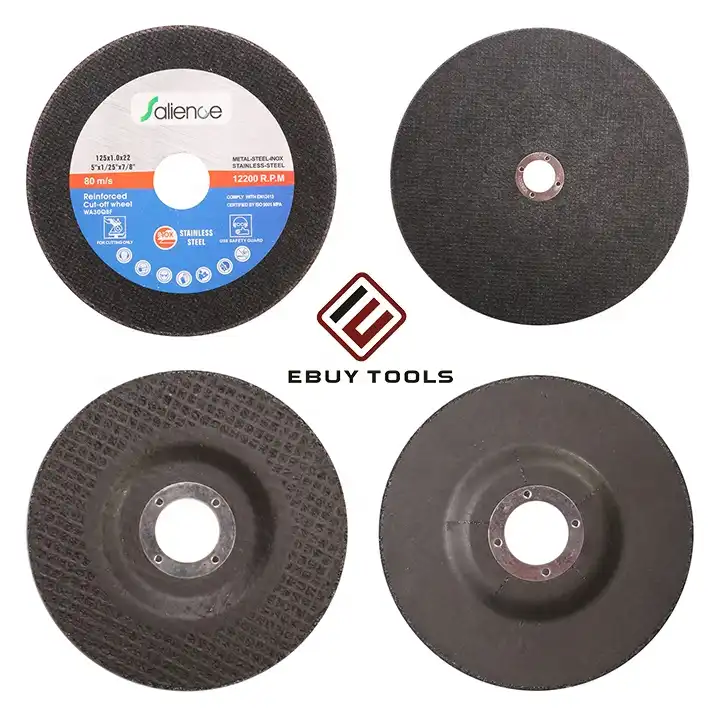
Understanding Metal Cutting Discs for Aluminum Sheets
Fundamental Differences Between Cutting and Grinding Discs
Cutting discs and grinding wheels look a lot alike, but they have different uses. A metal cutting disc features a thin profile that ranges from 0.8 mm to 3.2 mm. They are made for cutting tasks where removing as little material as possible is needed to make a clean split. Grinding wheels have bigger cross-sections, usually 6 mm or more, which lets you use horizontal pressure to prepare the surface and remove material. When you use a cutting tool for grinding, you cause terrible side loads that weaken the fiberglass reinforcement structure.
Abrasive Types for Aluminum Processing
For cutting metal, aluminum oxide is still the most common abrasive grain. Its angled fracture pattern makes cutting edges that stay sharp over time. White combined aluminum oxide is more pure and doesn't contain iron, which tarnishes the surface of aerospace-grade aluminum alloys. Zirconia alumina mixes are more durable for high-pressure cutting situations, but they are more expensive because they are harder to make.
Critical Specifications That Impact Performance
Cutting speed and depth capacity are directly related to the width of the disc. Most of the time, sizes range from 100 mm for handheld angle grinders to 400 mm for standing chop saws. To keep power tools from overheating, their maximum RPM rates must match their specs. When you run discs faster than their maximum peripheral speed, the bond breaks and the fiberglass support doesn't work as well. Bore sizes need to be perfectly matched with tool arbors. For industrial angle grinders sold in North America, 22.23mm is the most common bore size.
How to Choose the Best Metal Cutting Disc for Aluminum Sheets?
Evaluating Your Specific Cutting Requirements
The metal cutting disc diameter and arbor entry depth are based on the thickness of the sheet. Aluminum sheets between 0.5 mm and 6 mm thick are light-gauge materials that can be used with very thin disc shapes that reduce the width of the kerf and the amount of waste material. Standard-thickness discs are better for heavier plate stock that is more than 10 mm thick because they offer more support on the sides during long cutting operations. When it comes to high-throughput settings, premium disc formulations with longer service lives are justified by production volume factors.
Key Selection Criteria for Aluminum Applications
Cutting speed has a direct effect on how much is made and how tired the workers are. Discs made with the right bond hardness for aluminum keep their open abrasive structures that don't get loaded, so they can handle high cut rates for a long time. When working with aluminum metals that contain copper or silicon, which produce higher cutting temperatures, heat protection becomes very important. Controlled porosity and special bond chemistry are examples of thermal management features that keep workpieces from warping because of heat.
Tool compatibility for a metal cutting disc goes beyond just arbor size. Today's brushless angle grinders have speed controls that let you get the best surface footage for a range of materials and disc sizes. To keep discs from wearing out too quickly or creating dangerous resonance conditions, they need to be able to handle the force and sound patterns of certain power tool platforms.
Comparing Leading Manufacturers
Ceramic grain technology in Dewalt's aluminum cutting tools makes them very good at removing material from 6061 and 7075 metal grades. Their stronger build can handle the higher torque output of professional-grade angle grinders, which are popular in places where cars are made. Makita focuses on lowering vibrations through precise balance engineering. This keeps operators from getting tired during long cutting sessions that are common in making HVAC ducts.
When Bosch makes their aluminum-specific line, they add anti-loading materials that keep the cutting surfaces open even when working with sticky alloys. Their thin-kerf designs cut down on waste, which makes them appealing to manufacturers who want to save money and work with expensive aircraft sheet stock. Performance signs from these makers show that their cutting speeds are about the same. Where they differ are in how well they handle heat and how long their products last.
Procurement Considerations for B2B Buyers
There are big economic benefits to buying in bulk that go beyond simple volume discounts. By building ties with makers or distributors, you can keep the supply chain going and keep production going even when specialty discs need to be restocked. Minimum order numbers usually start at case lots with 25 to 100 discs, but bigger businesses can make agreements at the pallet level that save them even more money.
Supplier dependability includes things like making deliveries on time, making sure that products are the same from batch to batch, and being able to get expert help. Distributors with consignment inventory plans keep just-in-time supplies for production needs while lowering the amount of operating capital they need. Checking safety certifications like EN 12413 and oSa compliance saves businesses from the risk that comes with using abrasive products that don't meet standards.
Best Practices for Using Metal Cutting Discs on Aluminum Sheets
Proper Disc Preparation and Mounting
Before putting in any metal cutting disc, check the fiberglass support layers for delamination or cracks that could mean they were damaged during shipping or are breaking down due to age. Make sure that the highest RPM number is a good amount faster than the tool's working speed. Clean the tool arbor and flange surfaces to get rid of metal chips that have built up and make the fitting uneven. First, thread the arbor nut by hand. Then, use the spanner wrench that came with it to tighten it while the safety lock engages.
Optimal Cutting Techniques for Aluminum
To avoid the initial contact shock that can chip disc edges, approach metal sheets at shallow angles between 15 and 25 degrees. Keep the forward pressure steady without pushing the cut. This will let the abrasive grains work at the rate they were meant to. Too much pressure makes heat, which melts metal and helps the material stick to the disc surface. During long cuts, lift the tool every so often to get rid of built-up heat energy and metal chips in the cutting zone.
Essential Safety Protocols
For cutting metal with a metal cutting disc, you need safety glasses that can withstand impact and side shields, hearing protection that can handle settings with 100 decibels or more, and gloves that can withstand cuts but still let you feel things. Place yourself outside the disc's line of rotation. When something catastrophic fails, it sends debris along the path of spin. Never cut continuously for more than 45 seconds without letting the disc and object cool down first. This will keep the bond from breaking down because of heat.
Maintenance and Service Life Management
Disc wear shows up as slower cutting speed, more vibration, and a noticeable loss of width. When the diameter of a disc shrinks by 10 mm from its original size, it needs to be replaced because smaller diameters are more likely to fail because of higher stress concentrations. The conditions of storage have a big effect on the strength of the resin bond. Keep controlled humidity levels below 65% relative humidity and stay away from temperature spikes above 35°C. When kept correctly, discs keep working perfectly for the full three years that they are supposed to.
Where and How to Buy Metal Cutting Discs for Bulk Industrial Use?
North American Supply Channels
Large stockpiles of a metal cutting disc from many different brands are kept by industrial distributors like MSC Industrial Supply and Grainger. There are expert support tools available from these well-known suppliers that can help you choose the right product for your needs. Regional warehouse networks make next-day shipping possible in most major cities. This keeps production running as smoothly as possible when material needs to be restocked. Account reps work out volume-based price plans that lower the cost per unit for businesses that use a lot of discs.
Direct Manufacturer Relationships
Establishing direct buying relationships with makers like Danyang Ebuy Tools gives you access to private label and customizable specs that meet your specific business needs. Minimum order amounts usually start at commitments at the container level, which works well for big manufacturing operations or networks of distributors. Direct sourcing gets rid of the middleman's profit margins, but sellers have to handle the supply chain themselves. Working together technically with industrial partners lets you make products that work with certain types of materials or cutting situations that are common in certain industries.
Digital Procurement Platforms
Amazon Business and specialized industrial markets make it easy to place orders and show prices for a wide range of names. These sites work well for smaller businesses that need case-lot amounts but don't want to negotiate their account terms. Delivery times depend a lot on where the goods are fulfilled and how quickly they can be sent. Check the seller's credentials and the product's authenticity through lists of authorized manufacturers. Fake abrasive products are very dangerous and can cause companies to be sued or workers to be hurt on the job.
International Sourcing Considerations
When you buy cutting discs straight from Asian manufacturers, you have to deal with customs rules, quality control procedures, and longer wait times. Buying by the container offers huge savings on costs, but it needs a lot of working capital and space to store the goods. Before taking shipments, hire third-party testing services to make sure the products meet North American safety standards. Transportation costs and import taxes have a big effect on the total final cost, so it's not enough to just compare prices per unit.
Vendor Evaluation Criteria
In addition to unit price, you should also look at the supplier's expert support, return policies for broken goods, and paperwork like safety data sheets and compliance certificates. Suppliers with consignment inventory programs lower the amount of operating capital that is needed while still keeping the goods on hand. Check the rates of shipping damage for several orders at once, since proper packing has a direct effect on the quality of the product when it arrives. Set performance measures, such as the percentage of on-time deliveries and the accuracy of orders, that allow you to compare suppliers objectively.
Conclusion
To choose the right metal cutting disc for handling aluminum sheets, you need to know about the unique properties of the material and how different disc formulations deal with typical problems like loading, heat production, and burr formation. In this guide, we talk about technical specs, abrasive compositions, and bond systems. These help you make smart purchase choices that combine performance needs with budget limits.
Professional-grade discs made just for metal are much better than general-purpose discs when it comes to cutting speed, service life, and user safety. Investing in application-specific tooling pays off by boosting efficiency, lowering the cost of replacement parts, and raising the quality of the workpieces to meet the strict tolerance standards of the automobile, aerospace, and precision manufacturing industries.
By following the tips in this article and building relationships with dependable suppliers, businesses can improve the way they cut metal while still meeting the safety standards that are necessary in today's factory settings.
FAQ
Do I need specialized discs for cutting aluminum sheets?
Because aluminum is soft but sticks to itself, a normal metal cutting disc designed for steel quickly becomes overloaded with material, which causes too much heat and makes cutting less effective. Discs made just for aluminum have bonding agents and grain processes that keep the cutting surfaces clear. This stops the clogging that causes dangerous temperatures and early disc failure.
How often should cutting discs be changed in industrial applications?
Replacement times depend on the thickness of the material, how often it is cut, and the way it is operated. As main signs, keep an eye on disc diameter decrease and cutting ability loss. When the cutting speed drops noticeably or the sound level rises, replacing the blade right away stops quality problems and safety risks. Most factories keep track of the number of linear feet of cuts made on each disc so that they can set data-driven repair plans.
What are the most important safety rules to follow when cutting aluminum?
Aluminum makes small particles that are dangerous to breathe in and need the right respiratory protection in confined places. Due to its low melting point, the material forms molten debris when it is cut, so workers must wear flame-resistant clothes and face masks. Keep the air flowing properly so that metal dust doesn't build up and cause explosions in small spaces. No matter how hard it is to get to the product, you should never take off the disc guards or other safety gear from an angle grinder.
Partner with Ebuy Tools for Professional Aluminum Cutting Solutions
Danyang Ebuy Tools makes metal cutting disc solutions that are strong enough to be used in harsh production settings and are especially designed for processing aluminum sheets. Our 77,000-square-meter factory makes more than 150,000 cutting discs every day, making sure that businesses that need regular high-volume availability can keep their supply chains running smoothly. Each disc goes through strict burst speed tests at 1.5 times its rated RPM and meets EN 12413 safety standards that keep your workers safe while giving you great cutting performance.
Our expert team works with procurement managers to figure out the best disc configurations based on the type of metal, the thickness of the sheets, and the amount of production that needs to be done. Email our experts at [email protected] to talk about unique solutions that will lower your per-cut costs and make your operations run more smoothly. As a well-known company that makes metal cutting discs, we offer low prices for bulk orders along with the technical know-how and quality control measures that you need for your mission-critical production processes.
References
American National Standards Institute. "Safety Requirements for the Use, Care, and Protection of Abrasive Wheels." ANSI B7.1-2017. New York: ANSI, 2017.
Klocke, Fritz. "Manufacturing Processes 2: Grinding, Honing, Lapping." Berlin: Springer-Verlag, 2019.
Marinescu, Ioan D. "Handbook of Advanced Ceramics Machining." Boca Raton: CRC Press, 2018.
Society of Manufacturing Engineers. "Fundamentals of Cutting and Abrasive Processes." Dearborn: SME Publications, 2020.
Malkin, Stephen and Changsheng Guo. "Grinding Technology: Theory and Application of Machining with Abrasives." New York: Industrial Press, 2021.
International Organization for Standardization. "Abrasive Products – Safety Requirements for Bonded Abrasive Products." ISO 16057:2018. Geneva: ISO, 2018.