.webp)

Industrial buyers need to find the best metal cutting discs for angle grinders that work accurately, last a long time, and perform consistently in a wide range of challenging situations. A metal cutting disc is a specialized bonded abrasive tool that is designed to cut through ferrous and non-ferrous metals by causing high-speed friction and controlled material removal. Unlike regular saw blades, these discs use advanced abrasive grain formulations like zirconia alumina, silicon carbide, or aluminum oxide. They are bonded with phenolic resin and strengthened with multiple layers of fiberglass mesh to withstand high centrifugal forces and keep critical workpieces from getting too hot.

Understanding Metal Cutting Discs for Angle Grinders
What Are Metal Cutting Discs and Their Core Functions?
Metal cutting discs are abrasive tools that are meant to be used with angle grinders and fixed chop saws in professional welding settings. In the industrial world, these discs solve important problems like how to deal with the high tensile strength of alloy steels without deforming the workpiece, how to cut down on heat-affected zones that discolor metal or weaken structures, and how to keep operators from getting tired by cutting at high speeds with low vibration levels.
The building mixes carefully chosen abrasive grains with high-quality phenolic resin bonds, making a hybrid material that keeps cutting well while getting rid of heat well. This design makes sure that the best amount of material is removed in settings like making structural steel, car parts, aircraft precision work, and mold and die production, where the quality of the cuts has a direct effect on the next steps.
Common Types and Their Industrial Applications
Type 41 flat discs are great for manufacturing shops that work with I-beams and big plate steel because they can cut through thick materials straight. Type 42 depressed center discs provide better rigidity and horizontal stability, which is especially useful when cutting through reinforced materials or working in small areas where the grinder's ability to move around is important.
Ultra-thin options running from 0.8mm to 1.6mm make precise cuts with little waste, a smaller kerf width, and less noise, all of which are important for high-precision engineering and aircraft uses. Standard thicknesses between 2.5mm and 3.0mm offer better side strength for general welding and longer service life even under high production demands.
Key Technical Specifications Affecting Performance
The choice of diameter has a direct effect on the cutting depth that can be used and the safety of the process. The diameters range from 100mm to 400mm to suit different grinder sizes and application needs. Larger diameters allow for deeper cuts but require higher power levels and stricter safety rules.
Cutting speed and disc life are both affected by thickness. While thinner discs cut faster with less material loss, they also wear out faster. On the other hand, bigger discs last longer but produce more heat and cutting resistance. Bore size compatibility makes sure that the mounting is safe. Standard sizes include 16mm and 25.4mm setups that match the sizes of most grinder arbors.
The most important safety feature is the maximum RPM number. If you run a metal cutting disc faster than its rated speed, the fiberglass support structure will be under too much rotational stress and it could break. Professional buyers need to make sure that the disc speed rates are higher than their grinding machine's top no-load speed by a sufficient amount to ensure safety.
How to Choose the Best Metal Cutting Disc for Your Application?
Material-Specific Selection Criteria
To keep contact rust and contamination to a minimum, stainless steel processing needs INOX-specification metal cutting disc with less than 0.1% total iron, sulfur, and chlorine content. These special mixtures use white fused alumina abrasives that cut corrosion-resistant alloys cleanly and precisely without leaving behind metal dust that weakens the surface in marine, medicinal, and food-grade settings.
Brown fused alumina mixtures are great for general manufacturing because they offer a great cost-performance balance for both mild steel and carbon steel work. These formulas keep their cutting edge sharp because they have self-sharpening properties. This means that used grains break apart to show new cutting edges, so the metal cutting disc always works well.
Zirconia alumina abrasives that can handle high temperatures and strong cutting forces are needed for high-alloy materials like sharpened steel, titanium, and superalloys. When working with aircraft parts and precise tools made of unusual materials that are hard to work with with regular abrasives, these high-end formulations give better longevity.
Balancing Longevity, Speed, and Cut Quality
Instead of just looking at the original buy amounts, procurement managers need to look at the total cost per cut. Discs with higher G-ratios—which measure the amount of metal removed compared to the amount of wear on the disc—are more economically valuable, even if they may cost more per unit. In high-volume production settings, this measure has a direct effect on inventory turnover rates, operator effectiveness, and the general efficiency of the business.
Speed agreement is more than just matching RPM. Professional-grade discs have controlled pore structures that keep heat from building up while they're cutting. This technical feature keeps the metal cutting disc and grinder at the best temperature, which keeps the object from discoloring and keeps precision parts from warping when heated.
Cut quality includes things like surface finish, straightness of the edge, and how burrs form. Advanced grain distribution and better bond formulas on ultra-thin discs make edges that are better, which cuts down on secondary finishing steps and improves the accuracy of dimensions in precision machining processes.
Vendor and Brand Considerations for B2B Procurement
Companies that have been around for a while and have thorough quality management systems offer clear benefits by consistently meeting product requirements, ensuring a safe supply chain, and keeping records of their safety compliance. Certification to foreign standards like EN 12413 and oSa rules shows a dedication to manufacturing excellence and professional safety standards.
OEM approval means that the discs meet the performance and safety standards set by the original equipment maker. This designation gives procurement trust when setting up standard tools across multiple sites or production lines. This makes sure that performance is predictable no matter where the tools are used or how they are sourced locally.
The ability to provide technical help is what sets strategic partners apart from commodity providers. Manufacturers who give application engineering help, custom product development, and quick debugging help help industrial buyers get the best cutting parameters, lower running costs, and solve the tough material problems that come up in tough production settings.
Comparison of Top Metal Cutting Discs for Angle Grinders
Performance Analysis of Leading Industrial Brands
There are a number of well-known companies that make industrial abrasives, including the metal cutting disc. Each one offers different technology benefits for professional grinding tasks. Bosch products are designed to work precisely and with little vibration, making them ideal for controlled factory environments. DeWalt discs are made to last in building and fabrication settings. Makita's products are designed to cut quickly and efficiently while letting heat escape.
Norton has a lot of experience with abrasive science and can make special formulas for hard materials. Metabo discs use advanced grain technology to last longer even when they are being used a lot. Vibration reduction engineering is a big part of Milwaukee goods that make them more comfortable for operators. Tyrolit stands for high-quality European making that follows strict rules for quality control.
Instead of depending on name alone, professional buyers should compare these brands based on specific application needs. It's possible for cut-rate performance on mild steel to be very different from that on stainless steel, and disc behavior during continuous production cycles can be very different from that during occasional workshop use patterns.
Contrasting Metal Cutting Discs with Alternative Technologies
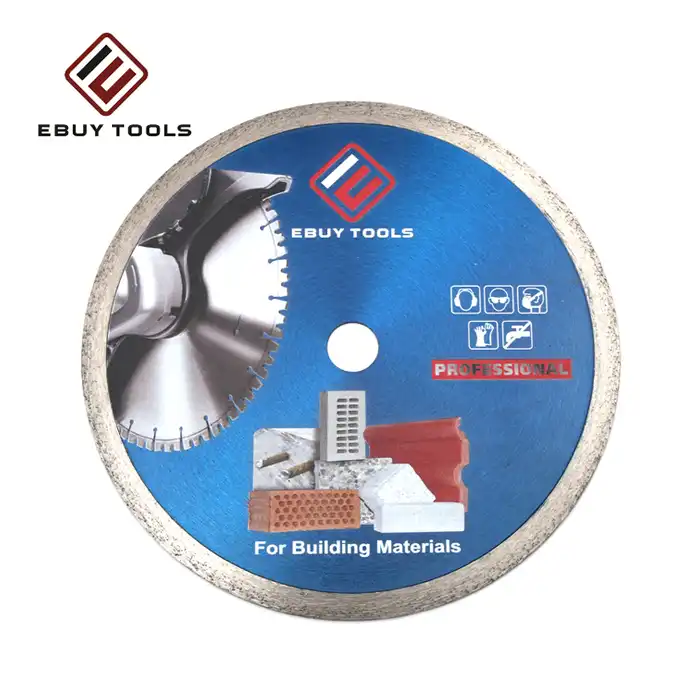
Diamond cutting wheels last a very long time and cut very quickly through very hard materials like stone, reinforced concrete, and ceramic alloys. But because they require a much bigger initial investment and can only be used in certain situations, they are not as cost-effective for general metal cutting tasks where attached abrasive discs are better value.
Standard abrasive grinding wheels have thicker curves that are made to remove material by grinding on the surface instead of cutting it off. When grinding wheels are used for cutting, they create dangerous side-loading conditions that weaken structures and raise the risk of catastrophic failure. This important difference shows how important it is to match the type of tool to the unique needs of the job.
When you compare lifetime costs, you'll see that expensive metal cutting discs with better G-ratios often lead to lower total costs, even though they cost more per unit. Industrial buyers should look at cost per linear cut meter instead of just per-disc purchase amounts when deciding on mass buying strategies.
Strategic Wholesale Procurement Considerations
If you buy in bulk through approved wholesalers or direct maker relationships, you can get better technical support services, better prices, and priority placement when supply is limited. By building smart relationships with suppliers, you can create custom stocking plans that lower the cost of keeping inventory on hand while still ensuring that production can continue.
Strategies for buying things in bulk should include ways to check the quality of the goods, like trying samples in typical production situations. Before committing to large-volume orders that will require longer production cycles, this method verifies the manufacturer's specs, makes sure it works with current equipment, and finds the best cutting parameters.
Our 77,000-square-meter factory in Danyang, China, makes cutting solutions for businesses. Every day, we can make more than 150,000 pieces. Our advanced production facilities and 319 skilled workers make sure that the supply chain works well for global businesses that need uniform quality and reliable delivery times.
Best Practices and Safety Tips When Using Metal Cutting Discs
Common Safety Mistakes and What Happens When They Happen
In abrasive disc processes, the worst safety violation is not matching the RPMs correctly. When discs are run faster than their stated speed, they create too much centrifugal force that is stronger than the tensile strength of the fiberglass support. This leads to catastrophic disc failure, which poses a projectile risk to people and equipment in large areas around the work area.
If you don't place something correctly, like if the flanges aren't lined up right or there isn't enough clamping pressure, or if any of the arbor parts are broken, it can cause vibration and instability that speed up disc wear, lower cutting precision, and raise the risk of structural failure. For professional operations to stay safe, mounting procedures must be established and checked on a regular basis.
When cutting with a metal cutting disc, side loading puts horizontal pressure on abrasive discs that they can't safely handle. Type 41 and Type 42 cutting discs are only made for radial cutting forces. If you need to grind or deburr with side pressure, you need specially made grinding wheels with the right thickness and support structure.
Essential Operation Guidelines for Industrial Settings
Safety glasses with side shields that meet ANSI standards, face shields for overhead cutting, hearing protection rated for long-term noise exposure, leather gloves that grip without limiting dexterity, and flame-resistant clothing that keeps sparks and debris from touching skin during long cutting operations are all required pieces of personal protective equipment.
Clear danger zones must be set up in the workspace so that they can't be accessed during grinding activities. Enough air flow gets rid of metal bits and keeps dust from building up, which can be dangerous for your health and cause fires. When you clamp the tool correctly, it stops moving, which stops binding, kickback, and loss of operator control during cutting processes.
Before starting to cut, pre-operational inspection procedures should check the disc's condition for visible cracks, chips, or damage to the reinforcement mesh; make sure the disc's expiration date is still valid, since phenolic resin bonds break down over time; make sure the grinder guard is in the right place and securely attached; and test run any new discs at full speed for a certain amount of time before starting to cut.
Maintenance Tips for Getting the Most Out of Your Disc
The way discs are stored has a big effect on how long they last and how safe they are. Keeping settings with reasonable humidity levels and controlled climates stops moisture absorption that weakens resin bonds and lowers burst strength. Putting things on their sides for vertical storage instead of flat stacking stops them from twisting and putting stress on the structure, which can affect balance and safety.
Regular upkeep on equipment, such as checking the bearings, measuring the spindle's run-out, and checking the state of the guards, stops operating problems that speed up disc wear and pose safety risks. When bearings are worn out, they cause too much shaking, which breaks discs too quickly, makes operators tired, and lowers the accuracy of the cut.
By recognizing signs of wear, you can change discs before their performance drops and affects production quality or safety gaps. Some signs that you need to change the metal cutting disc right away are a diameter reduction getting close to the minimum safe size, obvious reinforcement mesh exposure, strange vibrations or noises during operation, and less cutting efficiency that needs more feed pressure.
Procurement Guide: Where and How to Buy Metal Cutting Discs for B2B Clients?
Evaluating Purchasing Channels for Industrial Buyers
Online business-to-business (B2B) platforms make it easy to find a wide range of sellers with clear price information and streamlined purchasing processes. However, these platforms might make it hard to check the qualifications of manufacturers, make sure that product quality is uniform across shipments, and get quick technical support for application-specific needs or troubleshooting help.
Wholesale wholesalers of metal cutting disc have established ties with many makers, can handle consolidated orders that make managing inventory easier, and can keep goods in stock locally, which shortens wait times. There are some downsides, like the possibility of higher profit margins compared to buying directly from the maker and a lack of customization options for unique application needs.
Direct connections with manufacturers offer the best value for large-scale purchasing programs because they allow for customized product development, priority production schedule, and full technical collaboration. This route has higher minimum order amounts, but it gives you the most control over specifications, quality standards, and the reliability of the supply chain.
Critical Factors in Supplier Evaluation
Supply chain dependability includes checking production capacity, managing inventory well, and having the right transportation infrastructure to make sure deliveries are always made on time. Industrial buyers should look at how financially stable the maker is, how well their production can be scaled up or down depending on demand, and how well their regional spread matches their operations footprints.
Quality assurance systems, such as ISO 9001 certification, written testing methods, and traceability processes, give customers faith that the same product will be made in each batch and allow for longer supply relationships. Full burst testing at 1.5x to 2x stated RPM, checking the static and dynamic balance, and G-ratio analysis are all important parts of quality control.
Buyers are protected against early failure or poor performance by warranties and return policies. When companies stand behind their goods with clear warranty terms and quick claim settlement processes, it shows that they trust the quality of their engineering and want their customers to succeed.
Ebuy Tools Competitive Advantages in Industrial Supply
Our company offers the best value by using modern aluminum oxide and silicon carbide abrasive mixtures that are strengthened with three layers of fiberglass mesh. This gives you the most safety gaps possible when working in tough production conditions. Each metal cutting disc goes through strict burst speed tests at twice the maximum allowed RPM to make sure the structure is stronger than what is required by safety standards in the industry.
Our specialized Research & Development department is always improving abrasive technology, bond formulas, and reinforcement designs. This is what makes our manufacturing so good. This technical ability lets you make solutions that are specifically designed to meet the needs of your material, size, and performance requirements, which aren't possible with standard stock goods.
Precision machining shops needing ultra-thin discs for titanium aircraft parts, automakers wanting reliable performance in mass production settings, and mold makers needing wear-resistant tools for finishing complex cavities have all worked with us successfully. These partnerships show that we can provide dependable solutions for a wide range of industry uses.
Conclusion
To choose the best metal cutting disc, you need to know how the abrasive formulation, bond chemistry, strengthening design, and performance requirements for each application all work together. Professional buyers should look at the total cost per cut instead of the initial purchase amount. They should also put safety first by verifying RPM rates and quality certifications and build relationships with suppliers that meet both short-term and long-term business goals. As worker safety standards change, the metalworking industry keeps moving toward smaller profiles, more efficient cutting, special formulas for hard-to-find materials, and safer features. When you use these technical factors in your strategic purchasing choices, you'll get measurable benefits like lower running costs, higher production efficiency, and safer workplaces in tough industrial settings.
FAQ
What thickness works best for stainless steel cutting operations?
For stainless steel uses, ultra-thin discs between 1.0mm and 1.6mm work best, allowing for faster cutting speeds, less heat production, and little material waste. These specs are especially helpful when making food-grade and drug-grade products, where keeping things clean and making sure they are the right size are very important for quality.
How do I make sure that it will work with the angle tools I already have?
Check three important specs: the disc diameter can't be bigger than the grinder guard's capacity, the bore size must exactly match the arbor's dimensions, and the maximum disc RPM must be faster than the grinder's no-load speed. Using discs and tools that aren't meant to work together poses serious safety risks and voids the warranties that came with them.
Why do discs made of metal and steel need to be made in different ways?
Because aluminum has a lower melting point and tends to load up, it needs special grain structures and bond chemicals to keep it from getting clogged up, which stops it from cutting. When making steel, the focus is on making it hard to break and stable at high temperatures, so it can handle the higher cutting forces and higher temperatures that come with working with metallic metals.
Partner with Ebuy Tools for Superior Metal Cutting Disc Solutions
Danyang Ebuy Tools offers abrasive cutting options for businesses, with full quality assurance and quick expert help. Our metal cutting disc maker can make everything from very thin, precise discs to heavy-duty industrial discs. We make them all in a 77,000-square-meter factory that can make more than 150,000 pieces per day. We want people who work in purchasing, tools distribution, and industrial manufacturing to try out our advanced bond systems, triple fiberglass strengthening, and strict EN 12413 compliance. You can email our technical team at [email protected] to talk about custom specs, ask for performance samples, or get competitive quotes that meet your business needs.
References
American National Standards Institute. (2019). Safety Requirements for the Use, Care, and Protection of Abrasive Wheels. ANSI B7.1 Standard.
Norton Abrasives Engineering Handbook. (2021). Metal Cutting and Grinding Technology for Industrial Applications. Saint-Gobain Technical Publications.
Thompson, R. (2020). Modern Abrasive Technology: Materials, Applications, and Performance Optimization. Industrial Press Inc.
European Committee for Standardization. (2018). Abrasive Products – Safety Requirements for Bonded Abrasive Products. EN 12413:2007+A1 Standard.
Klocke, F., & König, W. (2022). Fertigungsverfahren 2: Schleifen, Honen, Läppen (Manufacturing Processes 2: Grinding, Honing, Lapping). Springer-Verlag.
Marinescu, I.D., et al. (2021). Handbook of Machining with Grinding Wheels. CRC Press, Second Edition.