.webp)

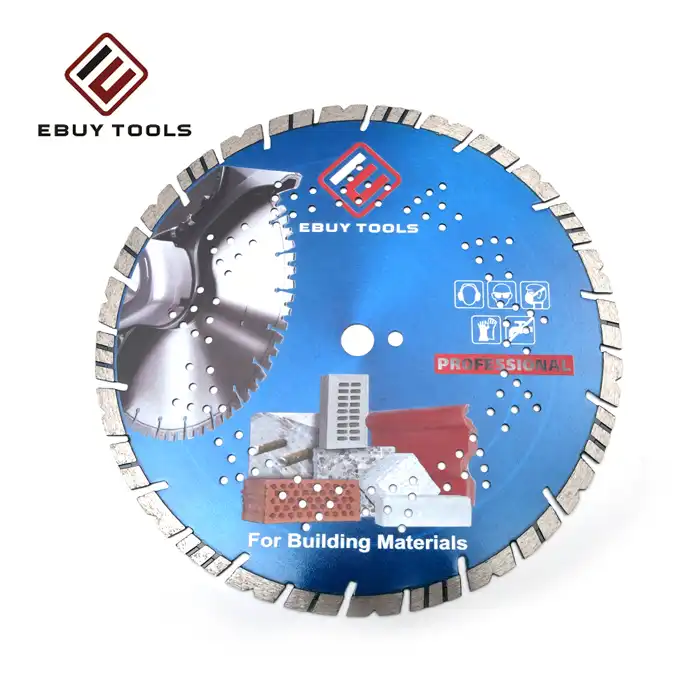
Professionals look for diamond cutting discs that are reliable, cut quickly, and last a long time when they are looking for the best ones for cutting concrete. A quality diamond cutting disc has industrial-grade synthetic diamonds embedded in a carefully designed metal bond matrix. This makes it work better on reinforced concrete, asphalt, and brickwork. The turbo-edge design solves the important problem of how to balance strong material removal with a smooth finish. It does this by combining serrated continuous margins with better airflow channels. These blades work with angle grinders, circular saws, and wall saws. They can cut both wet and dry materials and meet strict B2B procurement standards in the infrastructure repair, demolition, and building industries.
Understanding Diamond Cutting Discs for Concrete
The main benefit of diamond blades comes from the way they are made and how they work. High-temperature sintering methods are used to place industrial-grade synthetic diamonds in a metal bond matrix. This matrix is usually made of cobalt, copper, or iron-based alloys. By doing this, segments are made that let new diamond bits show through as the metal bond wears away during cutting. This keeps the diamond cutting disc performance uniform over its lifetime.


Types of Diamond Blades and Their Applications
The market for cutting concrete is dominated by three main blade configurations, each designed to meet unique operating needs:
Segmented Blades have different diamond-filled pieces that are divided by cooling gullets. These gaps make it easier for waste to get rid of and provide natural cooling pathways for dry cutting. Because of how they are made, segmented blades are great for demolition work, fixing roads, and other building jobs where getting rid of material quickly is more important than having a smooth edge. The broken pieces make the cutting action more violent, which breaks up concrete well but may cause micro-chipping along the cut edges.
Continuous Rim Blades have a diamond-studded edge that goes all the way around, making the cut as smooth as possible. Because there are no section gaps, these blades don't vibrate as much and don't chip. This makes them the best choice for building concrete work, making countertops, and any other job where looks are important. Because there are no cooling gullets in the continuous design, it is hard for heat to escape during dry operations. This means that cutting must be done while wet to avoid thermal buildup. Water lubrication gets rid of heat, clears out waste, and stops dust from forming all at the same time.
Turbo Rim Blades are an engineering solution that takes the best parts of both past designs and uses them together. The serrated continuous margin, which is also known as the "turbo edge," has raised patterns along the rim that raise the cutting pressure and make small openings for airflow and debris removal. This mix of approaches lets you cut faster than with continuous rim blades and keep the finish smoother than with split designs. Although turbo blades work well in both dry and wet conditions, cooling them with water makes them last longer and cut more efficiently.
Comparative Performance Analysis
When compared to regular rough cutting wheels, diamond blades provide significant benefits in a number of performance areas. When cutting concrete, abrasive wheels wear out quickly and need to be replaced often, which slows down work and raises the cost of consumables. As grit particles wear away, the cutting speed slows down gradually. This leads to uneven results and longer cutting times.
Due to constant diamond contact, diamond blades keep their cutting rates steady over their entire service life. The starting cost is higher than the cost of a grinding wheel, but the longer useful life—often 50 to 100 times longer—makes it a better investment in high-volume production settings. The quality of the cut stays the same from the first use to the last blade retirement. This is different from abrasive wheels, which tend to lose quality over time.
Critical Specifications for B2B Procurement
The disc's width and the size of the arbor hole for a diamond saw blade show if it will work with current equipment. Handheld angle grinders usually have diameters of 4 inches, while walk-behind concrete saws usually have diameters of 14 inches or more. The arbor hole, which is the center fixing opening, needs to be the right size for the cutting tool's spindle. For angle grinders, the most common size is 22.23mm (7/8 inch), and for bigger fixed saws, the arbor holes should be 1 inch. Before buying equipment, procurement managers should check the specs to make sure it will fit correctly and work safely.
Another important parameter is the maximum working speed, which can be expressed as revolutions per minute (RPM) or surface speed in meters per second (m/s). When you go faster than the stated speed, dangerous rotational forces are created that can break the blades. On the other hand, working at speeds that are much lower than what is suggested makes cutting less effective and speeds up premature wear. Our turbo diamond blades at Ebuy Tools can safely work at speeds of up to 80m/s because they are made with precision-tensioned steel cores and hot-pressed sintering technology that keeps the structure strong even when it's under a lot of stress.
How to Choose the Best Diamond Cutting Disc for Concrete Cutting?
Before making a purchase choice, operating needs must be carefully matched with product capabilities. Before you can make a choice, you need to know what kind of cutting setting you will be using the diamond cutting disc in most of the time. Wet or dry uses have very different design needs.
Wet Versus Dry Cutting Considerations
When you do wet cutting, water is added to the cutting surface to cool it, lubricate it, and keep dust away. This method improves cutting speed, makes the work area safer by getting rid of dangerous silica dust, and extends the life of the blade. When it comes to cutting hard, thick concrete or doing precise work, continuous rim and turbo rim blades work best when they are wet. The water supply system makes things more complicated, and it might not work for all job sites, especially those that are remodeling inside or managing water waste is hard.
Dry cutting doesn't need a water system, which gives operators more options and makes setting up tools easier. Segmented and turbo rim blades made for dry cutting have better cooling features like bigger gullets, specialized bond formulations, and better segment shapes that let air flow and get rid of heat. Because dry cutting makes a lot of dust, workers need to wear the right respirators and use dust collection systems to stay in line with OSHA rules and protect their health.
Equipment Compatibility and Application Matching
The blade design needs are based on the tools you already have. Handheld angle grinders can handle blades with a width of 4 to 9 inches and are good for small jobs, cutting edges, and fine details. Larger blades (12 to 20 inches) can fit on walk-behind concrete saws, which can cut through big slabs, make expansion joints, and fix roads. Wall saws and wire saws are special tools used to cut through thick structure concrete, remove bridge decks, and do other clearance work that needs deep cuts.
The types of materials you usually work with affect the blades you choose. Blades that are made to cut composite materials without losing segments or wearing out too quickly are needed for reinforced concrete that has steel rebar in it. This problem is solved by our Turbo Diamond Cutting Disc, which has a special diamond matrix and metal bond combinations that keep cutting steel support and concrete material efficiently. The continuous serrated edge increases cutting pressure, and the built-in channels make it easier for debris to flow away, so the blade doesn't get stuck when it hits rebar like most standard blades do.
Evaluation Metrics for Systematic Product Screening
When judging performance, more than just the initial buy price should be taken into account:
Durability and Service Life for a diamond cutting blade directly impact operational costs. Blades that are made with consistent diamond concentration, precise tensioning, and quality control measures will always work the way they're supposed to. Every batch that comes into our Danyang facility is put through a lot of tests, such as side run-out readings, segment torque tests, and hardness checks, to make sure that it is reliable enough for professionals.
Cutting Speed and Efficiency decide how long it takes to finish a job. Good diamond blades have a self-sharpening system that keeps the rate of material removal steady by revealing new diamond grit as the metal bond wears away. Controlled erosion stops the glazing effect that makes regular blades less useful. This happens when diamonds get buried in worn metal.
Precision and Finish Quality are very important, especially in building work, making countertops, and work that shows off gravel. The cut smoothness and edge integrity are affected by the shape of the blade, the quality of the diamond, and the accuracy of the production process. When you use turbo rim setups, you get a great mix between aggressive cutting and chip-free edges that are similar to continuous rim blades.
Safety and Compliance Standards must not be lowered. Blades made by reputable companies meet or go beyond EN 13236 and OSHA safety standards. Precision-balanced construction reduces vibrations to a minimum, which keeps cutting performance stable and reliable and reduces operator tiredness and equipment stress. Our engineering standards make sure that every blade works safely within certain limits, which protects both people using the equipment and the equipment itself.
Top-Rated Diamond Cutting Discs for Concrete in 2026
Several types of blades stand out for B2B consideration based on performance testing, feedback from buyers, and their ability to be used in a variety of situations. We don't recommend any one brand over another; instead, we look at the design and performance traits that make a good concrete cutting option.
Turbo Diamond Cutting Discs for Universal Applications
The turbo rim design is the most flexible way to cut concrete in most situations. These diamond cutting discs work great with granite, high-density brickwork, reinforced concrete, and other building materials. The serrated continuous margin design makes it easy to get rid of dust quickly while keeping the quality of the cut high. This solves the main problem with segmented blades without losing cutting speed, which makes continuous rim designs less practical.
Ebuy Tools manufactures turbo diamond discs that are designed to work well in professional settings like welding, aircraft engineering, car manufacturing, and tooling production. The standard trade-off between speed and finish quality is solved by our advanced engineering design. It does this by using improved castellations that lower surface contact alignment and raise cutting pressure to remove material faster. The built-in channels work like tiny fans, improving airflow and getting rid of dirt to keep the machine from burning and making it last longer.
We use a special diamond matrix and metal bond combo for diamond saw blade that makes sure the performance stays the same even when the material changes, without any covering or segment loss. These blades keep their sharp cutting edge and don't bind like other designs do, even when they're cutting steel-rebar-embedded concrete in removal work or shaping natural stone in fabrication shops. The curved turbo design makes it easy to get rid of dust quickly, which is especially helpful when cutting deeply into clay pavers or firebricks, where friction can build up and cause the blade to break too soon.
Heavy-Duty Segmented Blades for Demolition
Aggressive split blades give the best performance when speed of removal of material is more important than quality of finish. The large gaps between the pieces are great for keeping cool and clearing away trash during tough jobs like cutting roads, removing slabs, and tearing down buildings. These blades work well with walk-behind saws that have big diameters. They are also a cheap option for jobs where speed and durability are more important than how the cut looks.
When making a purchase, it's important to think about how well the segments are attached. Laser-welded segments hold together better than sintered ones, which is especially important when cutting near rebar or slab edges, where side impact forces can weaken segment bonds. The section height tells you how deep the blade can cut before it needs to be replaced, so this information is useful for figuring out the lifecycle cost.
Premium Continuous Rim Blades for Precision Work
Premium continuous rim technology is worth the money for tasks that need cuts that are free of chips and smooth. These blades are great for making countertops, working with artistic concrete, and any other job where the finished edge needs to be seen. The continuous diamond edge makes cuts that are very close to the quality of a finished finish, which means that less extra processing is needed.
To keep heat from building up, wet cutting is still needed with continuous rim blades. Performance is greatly affected by the water flow rate and where the nozzle is placed. Getting the right amount of water to the cutting surface keeps it from getting too hot and clears the cut path of concrete slurry. Although these blades usually come with a higher price tag, they are worth it because they require less finishing work and produce better results in terms of looks.
Specialized Blades for Rebar-Reinforced Concrete
When cutting composite materials, like concrete with steel reinforcements built in, you need tools that were made just for that purpose. When they hit rebar, standard concrete blades may break or chip pieces, but metal-cutting blades wear out quickly on aggregate. Specialized composite blades have different amounts of diamonds and different bond formulas that work well to cut both materials at the same time.
The segments on these blades are designed in a way that keeps them engaged with both concrete and steel without too much wear or heat damage. Buying tools that are made for a specific job is well worth it for difficult removal and remodeling jobs where the depth of the reinforcement is unknown until the cutting starts.
Conclusion
To choose the right concrete cutting options, you have to weigh a lot of performance factors against price and operational needs. Diamond cutting disc technology has many benefits over traditional abrasives, including a longer useful life, uniform cutting performance, and the ability to work with a wider range of materials. Investing in good tools pays off in the form of lower costs for replacement parts, less downtime for equipment, and better project results.
Turbo diamond cutting discs are the most versatile tool for most business-to-business tasks because they can cut aggressively and leave a smooth finish, and they work reliably in both wet and dry conditions. Procurement pros can make smart choices that boost productivity while keeping costs low by knowing the different types of blades, what they're used for, and how to operate them properly. Building relationships with capable manufacturers guarantees a steady supply, easy access to expert help, and the possibility of customization to meet specific needs.
FAQ
What makes diamond blades better for cutting concrete than rough wheels?
Diamond blades remain sharp throughout their useful life because they have a self-sharpening system that keeps them sharp. This mechanism continuously exposes fresh diamond particles. Abrasive wheels wear out quickly and lose efficiency progressively, requiring frequent replacement. The service life of quality diamond blades exceeds abrasive wheels by 50 to 100 times in concrete applications, delivering superior long-term value despite higher initial costs. Cut quality remains consistent from initial use through final retirement, eliminating the degradation common with abrasive wheels.
Can I use the same blade for wet and dry cutting?
Blade design determines wet versus dry suitability. Turbo rim and segmented blades engineered specifically for dry cutting incorporate enhanced cooling features that dissipate heat through air circulation. These blades also function effectively with water cooling, which extends service life and increases cutting speed. Continuous rim blades require wet cutting to prevent thermal damage, as the uninterrupted edge lacks cooling gullets for adequate heat dissipation during dry operation. Verify manufacturer specifications before using any diamond cutting disc in dry applications to prevent premature wear or dangerous overheating.
How do I determine the correct blade size for my equipment?
Equipment specifications dictate compatible blade sizes. Check your angle grinder, concrete saw, or specialized cutting equipment documentation for maximum blade diameter and required arbor hole size. The arbor hole—central mounting aperture—must match your equipment spindle exactly for safe operation. Common specifications include 22.23mm for handheld angle grinders and 1-inch arbor holes for larger stationary saws. Never exceed the maximum blade diameter rating for your equipment, as oversized blades create dangerous operating conditions and may cause equipment damage.
Partner with Ebuy Tools for Premium Diamond Cutting Solutions
Procurement managers seeking reliable diamond cutting disc suppliers can elevate operational performance by partnering with Danyang Ebuy Tools. Our manufacturing expertise produces 150,000 diamond saw blades daily through advanced hot-pressed sintering technology and precision engineering standards developed over years of serving global markets. The Turbo Diamond Cutting Disc line addresses the specific challenges facing metalworking workshops, automotive manufacturers, aerospace engineering firms, and tooling producers through superior material performance, extended service life, and versatile wet-dry capabilities. Contact our team at [email protected] to discuss your concrete cutting requirements, request samples, or obtain tailored pricing for bulk orders.
References
Construction Specifications Institute. (2023). "Diamond Tooling Selection for Concrete Cutting Operations: Technical Performance Standards and Application Guidelines."
American Concrete Institute. (2024). "Guide to Cutting and Drilling Concrete Structures: Tool Selection and Best Practices."
International Association of Concrete Drillers and Sawers. (2023). "Diamond Blade Technology: Composition, Manufacturing Processes, and Performance Characteristics."
Occupational Safety and Health Administration. (2024). "Safety Guidelines for Power Tool Operations in Construction: Concrete Cutting Equipment Standards."
European Committee for Standardization. (2023). "EN 13236: Diamond Tools for Cutting and Drilling - Safety Requirements and Testing Procedures."
National Institute for Occupational Safety and Health. (2024). "Crystalline Silica Exposure Control in Construction: Best Practices for Concrete Cutting Operations."
_1732239824901.webp)