.webp)

When searching for the best diamond cup wheels for industrial concrete floor preparation, professionals need tools that balance aggressive material removal with extended service life. A quality diamond cup wheel combines high diamond concentration with engineered segment designs to tackle everything from epoxy coating removal to high-PSI concrete leveling. These specialized grinding tools outperform traditional abrasives by maintaining consistent cutting performance while preventing thermal damage to substrates. The right wheel transforms demanding floor prep tasks into efficient, predictable operations that meet tight project deadlines without compromising surface quality.
Understanding Diamond Cup Wheels for Concrete Floor Preparation
Compared to traditional silicon carbide abrasives, diamond cup wheels are a big step forward in technology. Industrial-grade diamonds are inserted in a metal matrix and attached to a core made of high-tensile steel. Because they are sharp, the diamonds cut through the concrete and shape it through controlled scratching instead of melting or spreading.
Core Functionality and Surface Interaction
The grinding process is done by a device that sharpens itself. As the machine works, the metal link wears away, revealing new diamond crystals. This keeps the tool's cutting action strong over its entire life, unlike resin-bonded wheels that wear out and need to be replaced often. The conductive metal matrix successfully gets rid of heat, which stops micro-cracking and surface burns that weaken the base. Steel bodies that have been heat-treated can handle practical stress and keep their shape even when they are under a lot of lateral load.
Wheel Types and Applications
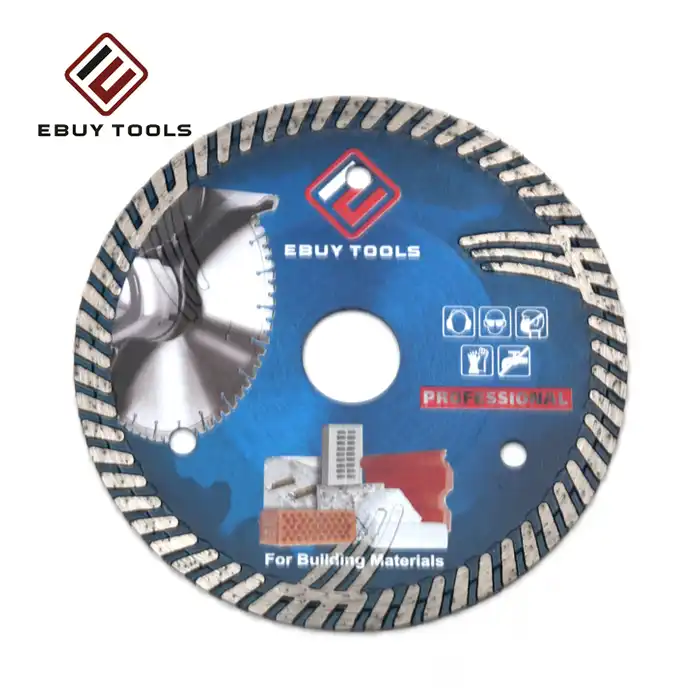
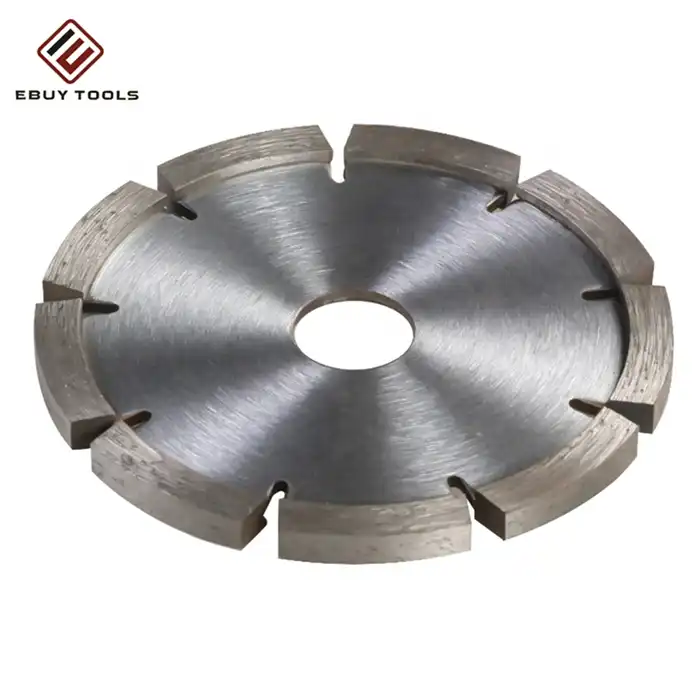
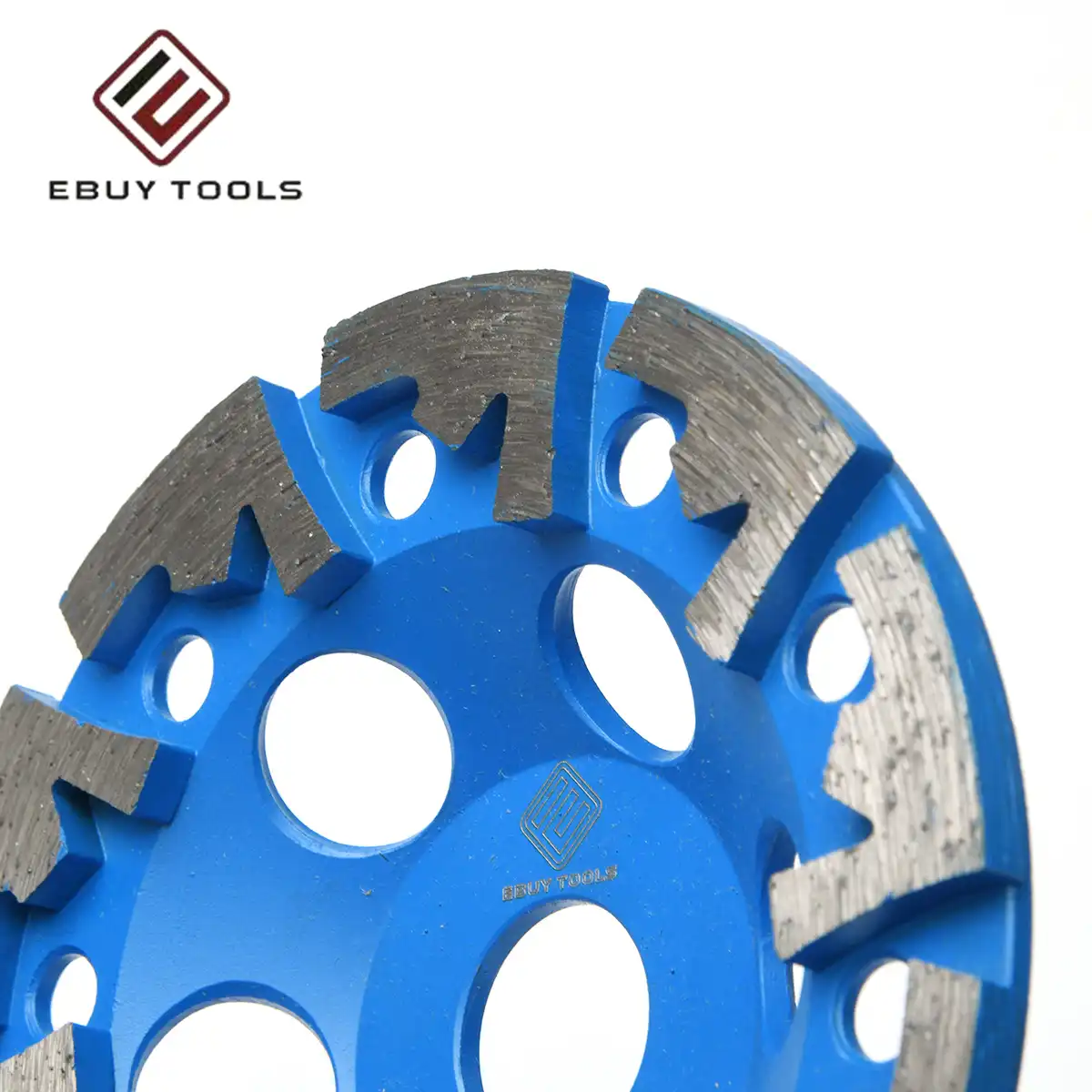
Different segment combinations are used for different real-world situations. Segmented turbo rim designs have serrated edges that help move trash faster. This makes them perfect for getting rid of thick epoxy coats and urethane adhesives. The air holes between the pieces make it possible to grind both dry and wet materials, and they also make the wheel last longer by keeping it cooler.
By spreading the grinding pressure over a bigger contact area, double-row segments make finishes on visible aggregate concrete smoother. When it comes to leveling uneven joints and getting rid of surface lippage, turbo segments remove stock more quickly than any other type. Arrow and PCD segment designs keep the material removal rates steady when working with soft surfaces by keeping the tool from getting clogged.
Operational Parameters
For best performance, make sure that the wheel specifications meet the powers of the equipment. Angle grinders usually work at speeds between 10,000 and 13,000 RPM, while concrete grinders work at slower speeds between 2,500 and 5,000 RPM. For finishing, faster speeds work best with finer grit wheels, while slower speeds work best with coarser grit wheels for heavy prep work. Applying the right amount of pressure is very important. Too much force limits diamond contact and speeds up bond wear, while not enough pressure causes glaze, which is when diamonds get stuck in the worn matrix.
How to Choose the Best Diamond Cup Wheel for Industrial Concrete Floors
When making a procurement choice, technical specs must be carefully compared to project requirements. If you choose the wrong diamond cup wheel, it will wear out faster, have a worse finish, or even damage your equipment.
Essential Technical Criteria
The size of the diamond grit has a direct effect on the cutting speed and surface finish. Fine sizes, from 16# to 30#, take off material quickly but leave scratch marks that can be seen. This makes them good for initial leveling and getting rid of coatings. To prepare a surface for general use, medium grits (40# to 80#) combine the rate of removal with the quality of the finish. Fine grits between 120# and 150# make surfaces smooth for the last steps of finishing. Our factory makes wheels with all of these different grits, which lets us use staged grinding methods that improve both speed and surface quality.
The "Opposite Rule" guides the choice of bond strength. For hard concrete over 4,000 PSI, you need soft bonds that let diamonds come loose quickly, revealing new cutting edges before they get dull. On the other hand, green concrete or soft concrete need hard links that hold diamonds longer and stop matrix loss before it starts. Mixed-hardness floors are popular in industrial buildings, and medium-bond floors can be used in a number of ways.
Segment Design Considerations
Attachment methods for segments affect how safe and reliable a tool is and how well it works. High-frequency welding binds pieces to steel bodies at the molecular level, giving them better shear strength that can handle high RPM operation. Laser welding lets you precisely control the heat, which keeps smaller wheel bodies from warping from heat. For light-duty jobs, cold-pressed pieces are a cheap option, but they don't have the holding strength needed for industrial floor prep.
Grinding area and tool compatibility are both affected by the diameter of the wheel. The 4-inch wheels are good for small jobs around columns and edges, while the 5-inch and 7-inch wheels are a good compromise between portability and efficiency. Diamond cup wheel geometry also plays a key role in surface finish and material removal rate, so choosing the right profile is as important as size. The arbor hole sizes need to match the shafts of the grinders. For example, 22.23mm holes work with most angle grinders, while 5/8-11 threaded hubs work with professional floor grinders.
Comparative Analysis
In many ways, diamond cup wheels are better than other options. On hard concrete, resin cup wheels wear out quickly, so they need to be replaced more often, which costs more in work and delays the job. Because they are sensitive to heat, the bonds break under long-term cutting pressure, which makes the surface finishes uneven. Because flap discs aren't hard enough to make flat surfaces, they create waves that need more correction passes. When they hit rebar or buried rocks, traditional grinding wheels made of aluminum oxide quickly lose their ability to cut.
It is important to note that metal-bonded diamond wheels keep their shape over time. The G6.3 dynamic balance grade reduces vibrations to a minimum, which keeps operators from getting tired during long grinding sessions. Run-out limits of less than 0.1 mm make sure that the tool makes flat contact with concrete, which gets rid of the "chatter marks" that are common with cheaper tools.
Top Performing Diamond Cup Wheels for Concrete Floor Preparation
Industrial buyers need diamond cup wheels that are built to keep working well in tough situations. Danyang Ebuy Tools makes grinding wheels that are designed to meet the needs of metalworking shops, car dealers, and general builders.
Advanced Engineering Features
Our segmented turbo rim wheels have sharp cutting shapes that are best for getting rid of material quickly. A lot of diamonds in the metal framework makes cutting go faster, which cuts down on project timelines. The quality of the fake diamonds is very important. Diamonds with better toughness grades don't break easily when hit by rebar or aggregate particles. Heat-treated steel bodies last longer because they don't bend when temperatures change, so they keep their shape over thousands of linear feet of grinding.
The arrangement of vent holes does more than just cool the air. These holes make air ducts that stop dust from forming during dry grinding, which makes the work area easier to see. They also make it easier for the slurry to drain away during wet grinding, which stops the glazing that happens when bits of ground concrete pack between diamonds. Compared to solid-rim wheels, this style makes wheels last a lot longer.
Value Considerations for Bulk Procurement
Professional wholesalers and builders should look at the total cost of ownership instead of just the initial purchase price. It is more cost-effective to buy a high-quality wheel that grinds twice as many square feet before it needs to be replaced than a cheap one that needs to be changed often. Our daily production ability of about 150,000 pieces lets us offer cheap volume deals without lowering quality standards.
Instead of cost per wheel, people who work in procurement should look at cost per square foot of concrete handled. Longer service intervals are directly linked to higher diamond content and better bond metallurgy. When you think about how many dozens or hundreds of wheels are used every year, the saves add up. Our quality control procedures make sure that each batch is the same, so there is no performance variation that makes planning projects harder.
Customization and OEM Services
For industrial uses, specs are often needed that aren't available in normal catalogs. Our Research and Development team works with clients to come up with custom solutions that solve their specific problems. Custom section designs make certain concrete mixes or coating systems work better. Specialized bond formulas can work with aggregates that have odd hardness profiles or are rough, and these tailored approaches are equally valuable for diamond cup grinding wheel applications where material variability demands precise engineering. These changes make floor preparation more efficient while protecting the ability of tool sellers and equipment makers to differentiate their brands.
Branding services let partners who are qualified sell wheels under their own names. When minimum order requirements are met, adding a logo and designing custom wrapping helps people remember your brand. This feature is especially helpful for regional dealers and tooling suppliers who want to get a foothold in the market by offering quality-assured goods made by experts.
Best Practices and Safety Tips When Using Diamond Cup Wheels
For operational success, you need to pay attention to both safety rules and improving your techniques. Good methods keep workers safe and make sure that diamond cup wheels work well and last a long time.
Personal Protective Equipment Requirements
Eye protection that is rated for high-velocity particle impact keeps you from getting hurt by diamond and concrete chips. Full-face shields protect against impact debris better than regular safety glasses because they cover more of the face. During dry grinding, it is very important to protect your lungs. Crystalline silica in concrete dust damages lungs in a way that can't be fixed over time. NIOSH-approved P100 respirators filter air well enough for industry floor prep areas.
Hearing protection protects against long-term noise exposure from high-RPM grinding activities. During long work sessions, foam earplugs or earmuff-style protection lower the sound level to a safe level. Heavy-duty work gloves that reduce vibrations keep your hands from getting tired and protect you from concrete surfaces with sharp edges.
Machine Compatibility and Setup
By comparing the wheel's specs to the grinder's skills, you can avoid dangerous mismatches. The RPM rates that are stamped on the wheel bodies should never be pushed past. Doing so could cause a fatal segment detachment that could seriously hurt someone. Compatible spindle threads make sure that the fixing is stable and there is no wobble or run-out that would damage the quality of the surface finish.
The placement of the guard is very important for protecting against wheel pieces in the rare event that the system fails. Safety and practical needs are balanced by adjusting the guards to cover the highest wheel exposure while still letting workers get to the area they need to reach. Checking the fixing gear on a regular basis keeps it from coming loose during use, which can cause vibrations and wear that happens too soon.
Performance Optimization Techniques
Keeping the right grinding angles affects both the quality of the surface and the life of the wheel. By holding the tool 10 to 15 degrees off of horizontal, you can get the best diamond engagement and keep the edge from breaking. When there is too much tilt, the pressure builds up on the ends of the segments, which leads to early bond loss and uneven wear patterns.
How tools are cooled affects both how comfortable workers are and how well they work. Wet grinding with a constant flow of water fully gets rid of dust while increasing diamond contact rates through strong bond wear. While dry grinding is convenient, it needs to be done often and for short periods of time so that heat doesn't build up. Misting systems are a good compromise because they use little water to control dust without making it hard to clean up slurry.
Regular repair makes tools last a lot longer. Concrete buildup that causes shaking and instability can be removed by cleaning the grinding wheels after each use, and for diamond cup grinding wheel users, this step is especially critical to maintain consistent cutting performance. By checking parts for cracks or loosening, problems can be found early on, before they become unsafe or affect performance. Rust on steel bodies damages structures, so it's important to store them properly in dry places.
How to Procure Diamond Cup Wheels Efficiently for Your Business
Strategic purchasing cuts costs and makes sure that diamond cup wheels are always available, which keeps projects on schedule. Long-term value comes from finding skilled suppliers and building strong relationships.
Evaluating Manufacturer Credentials
Production capacity shows how quickly and easily a company can handle big or regular sales. Our 77,000-square-meter facility with 319 trained workers shows that we have the means to keep up a steady flow of high-volume goods. The amount of work that an operation does each day shows how big it is. Companies that make tens of thousands of things every day have better quality control and more regular lead times than smaller businesses.
Quality approvals give industrial standards an objective seal of approval. Conformity to EN 13236 for superabrasives means that they meet European safety standards for things like burst speed tests and marking. Dimensional approval according to ISO 6104 makes sure that the arbor holes, wheel diameters, and section heights meet international standards so that the tools can work together.
Building Supplier Relationships
When you deal directly with a maker, you avoid having to pay markups to middlemen and can talk to them more clearly about specs and delivery times. By opening accounts with producers instead of distributors, you can get access to expert support tools that can help you match the specs of a wheel to the needs of an application. Engineering teams at factories have knowledge that you can't get from channels that only deal with sales, like selling channels.
Authorized dealer networks help manufacturers reach customers in regional areas while keeping the products' identity. Distributors that are hired by makers only carry real goods, not iffy imports that might not have been properly tested for safety. As part of these agreements, sales teams are often given training to help them help customers choose the right wheels.
Logistics and Supply Chain Management
To buy things internationally, you need to know about the different shipping ways and how they affect cost and performance. Ocean freight has the lowest per-unit costs for shipping large orders, but you need to plan further ahead of time to account for travel times. For high-value sales or jobs that need to be finished quickly, air freight is the best way to get supplies quickly. Standards for packaging protect wheels during transport; individual boxes with foam layers keep damage from impacts and vibrations at bay.
Delivery times depend on how complicated the order is and how much customization is needed. Standard store items usually ship within a few days of being in stock. Custom specs that need unique segment patterns or bond formulations make wait times longer while tools are being made and production runs are being made. Taking these things into account when making purchases keeps projects from being held up by problems with getting the right tools.
Conclusion
To choose the best diamond cup wheels for preparing an industrial concrete floor, you need to pay close attention to the technical specs, the needs of the application, and the supplier's abilities. Metal-bonded diamond wheels with designed segment shapes and high-quality diamond crystals remove more material than other wheels and keep working well even after longer periods of time between services.
When procurement pros know how concrete hardness, bond choice, and grit size affect each other, they can choose wheels that are the most productive and cost-effective. Working with makers that offer strong quality control, the ability to customize products, and dependable supply lines is the best way to make sure that floor preparation tasks go smoothly and without any delays caused by tools.
FAQ
How do I choose the correct bond hardness for my application?
Use the "Opposite Rule" to choose the hardness of the link. For concrete surfaces that are harder than 4,000 PSI, you need soft bonds that let diamonds come loose quickly, revealing new cutting edges before they get dull. For rough or soft concrete, you need hard links that keep the diamonds in place for longer, stopping the matrix from wearing out too quickly. Medium-strength bonds are useful for floors with different levels of hardness that are popular in industry settings.
What causes diamond cup wheels to glaze over and stop cutting?
Glazing happens when the link is too strong for the material being ground, keeping worn diamonds inside the matrix instead of letting them go. This problem can be fixed by switching to a softer bond standard. By grinding a rough block into the wheel to dress it, you can also briefly reveal new diamonds. However, choosing the right bond will solve the problem for good.
Can these wheels be used for dry grinding applications?
Most quality metal-bonded diamond cup wheels accommodate both dry and wet grinding. Dry operation offers convenience and eliminates slurry cleanup but requires periodic cooling breaks to prevent thermal buildup. Wet grinding with continuous water application maximizes tool life by reducing friction heat while completely suppressing silica dust for healthier work environments.
What segment types work best for coating removal?
Arrow and PCD segment patterns excel at removing epoxy coatings, adhesives, and paint without clogging. The specialized geometry prevents smearing that occurs with standard segments. Turbo segments also perform well on coating removal thanks to aggressive debris evacuation through their serrated edges and venting holes.
How do I know if my wheel is properly balanced?
Excessive vibration during operation indicates imbalance from manufacturing defects or damage during use. Quality wheels meet G6.3 balance grades or better, producing minimal vibration even at maximum RPM. Checking run-out tolerance with dial indicators reveals axial and radial deviations—measurements exceeding 0.1mm suggest replacement is needed.
Partner With Ebuy Tools for Your Diamond Cup Wheel Requirements
Danyang Ebuy Tools serves industrial concrete grinders all over the world by combining knowledge of how to make tools with full customer service. Every day, our production system sends out about 150,000 diamond tools, making sure that they are always available for projects of any size. We manufacture diamond cup wheels with turbo-segmented designs, high-concentration diamonds, and heat-treated steel bodies that can handle tough floor preparation jobs. Different types of concrete and project needs are met by technical specs such as variable bond hardness, different grit choices, and safety compliance with EN 13236.
Our R&D team makes wheels that are best for your needs, whether you need regular stock items or solutions that are specifically designed for you. Email our team at [email protected] to talk about your needs with experts who know how to deal with problems that come up in industrial grinding. We can make deals that are cheap for qualified diamond cup wheel distributors and sellers who are looking for reliable production partners.
References
1. American Concrete Institute. (2019). "Surface Preparation Standards for Concrete Grinding and Polishing." ACI Committee Report 310.2R.
2. International Superabrasive Association. (2021). "Selection and Application Guide for Diamond Grinding Tools in Industrial Concrete Processing."
3. National Institute for Occupational Safety and Health. (2020). "Engineering Controls for Silica Dust in Concrete Grinding Operations." NIOSH Publication No. 2020-115.
4. European Committee for Standardization. (2018). "Safety Requirements for Abrasive Products - Diamond Cup Wheels." EN 13236:2018 Standard.
5. Concrete Polishing Association of America. (2022). "Best Practices Manual for Floor Preparation Equipment and Diamond Tooling Selection."
6. Materials Research Society. (2020). "Tribological Performance of Metal-Bonded Diamond Abrasives in Concrete Surface Processing." Journal of Materials Science, Volume 55, Issue 8.