.webp)

In the metalworking, car manufacturing, aircraft engineering, and mold-making industries, diamond cutting discs provide unrivaled performance when it comes to cutting hard materials efficiently. Industrial-grade synthetic diamonds are inserted in perfectly formulated metal bonds in these specialized tools. This lets them cut through reinforced concrete, granite, titanium alloys, and high-density brickwork, which is what regular abrasive wheels can't do. When combined with advanced bonding matrices, the 10 on the Mohs scale hardness of diamond particles directly leads to faster material removal rates, longer tool life, and lower operational costs. If procurement managers know about the real benefits of diamond cutting technology, they can make decisions that affect both productivity and revenue, no matter if their shop does precise CNC machining or large-scale production runs.
Understanding Diamond Cutting Discs
Compared to older abrasive technologies, diamond cutting discs are a big change. Diamond cutting discs stay sharp because they have controlled bond breakage that reveals new diamond crystals all the time. Standard silicon carbide or aluminum oxide wheels use grains that are easily broken and become dull very quickly.
Construction and Core Technology
Quality diamond cutting discs are made through a process called hot-pressed sintering, in which metal powders (usually cobalt, copper, or iron-based alloys) are mixed with synthetic diamond grit under very high temperatures and pressures. Our precision-tensioned steel cores at Danyang Ebuy Tools can handle speeds of up to 80m/s, which is in line with EN 13236 safety standards. This way of building makes sure that the diamonds are evenly spread out throughout the cutting segment, which stops the early segment loss that happens with cheaper options. The bond's toughness is set to match the material being cut; softer bonds work with hard materials like granite so the diamond can be exposed more quickly, while harder bonds work with softer concrete so the diamond stays in place longer.
Types and Configurations
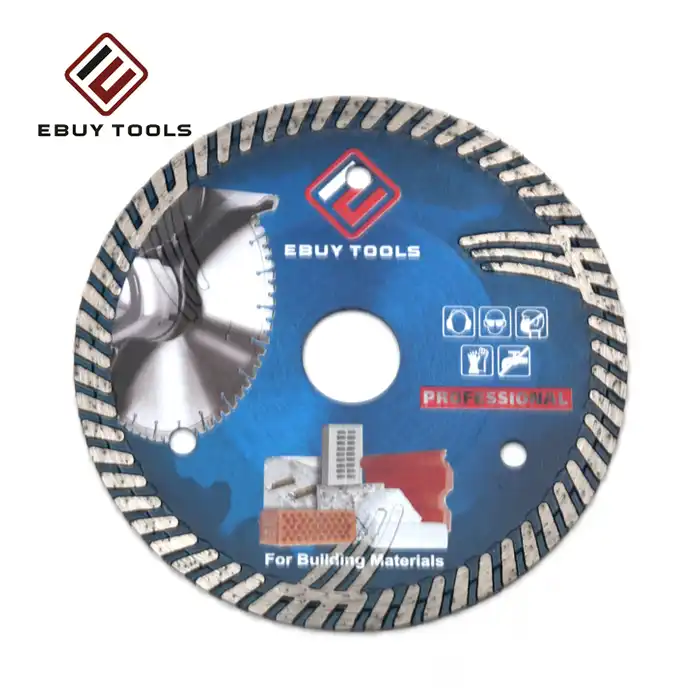
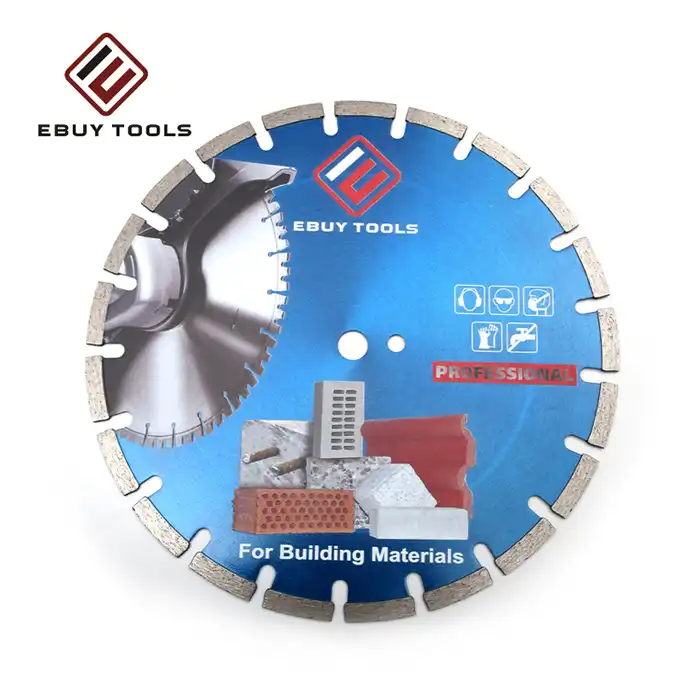
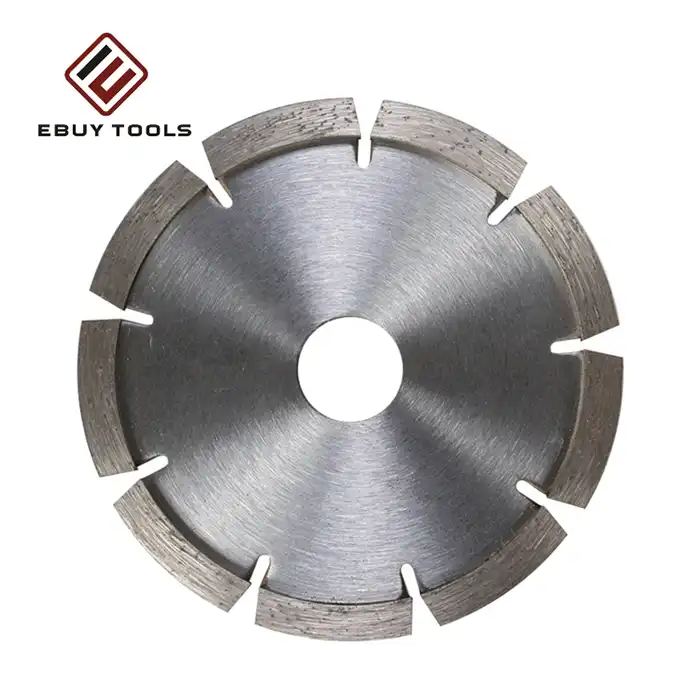
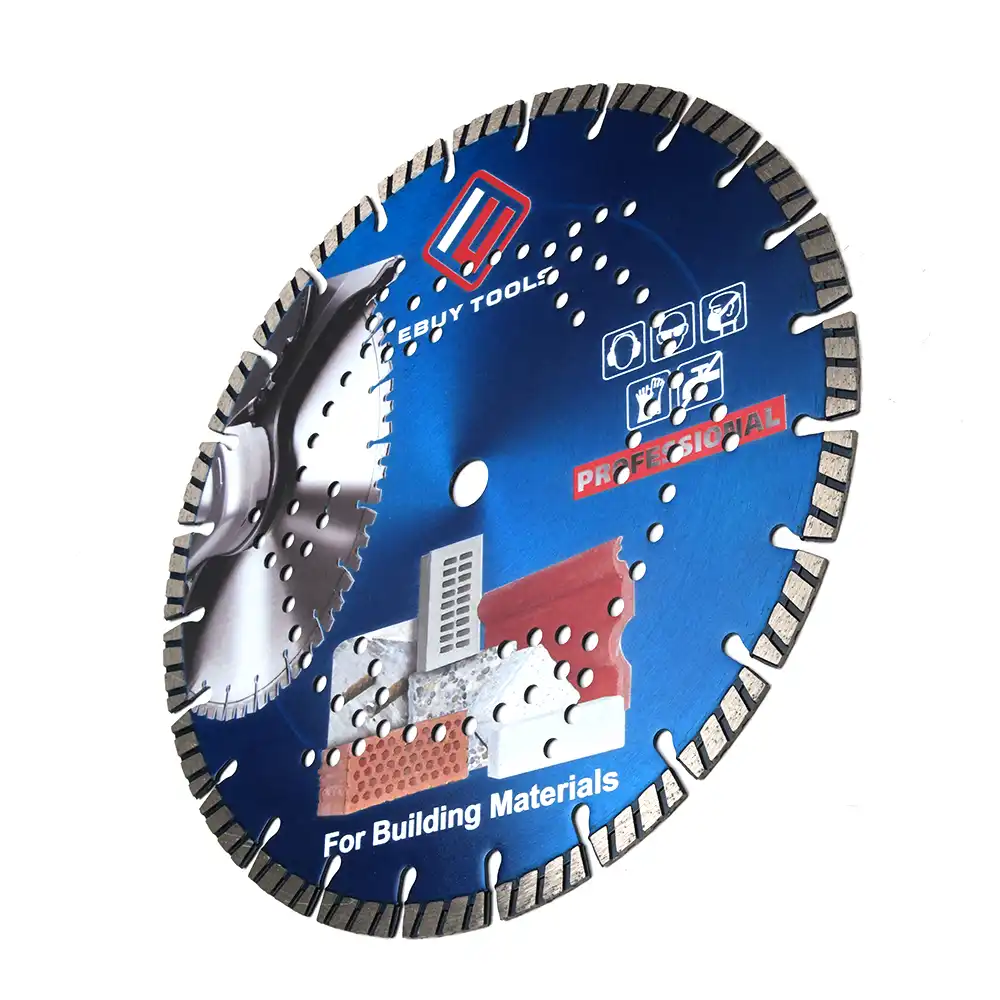
Different cutting situations need different types of diamond cutting discs. Continuous rim discs leave surfaces like tile and stone without chips, but they make a lot of heat when used in dry situations. Because there are gullet gaps between the segments, segmented blades cool better, which makes them perfect for concrete work. Our Turbo Diamond Cutting Disc fills in this gap with its continuously toothed edge, which makes cutting smoother and better at getting rid of dust. This turbo edge design has castellations that lower surface contact, which raises cutting pressure, and built-in channels that make it easier to remove waste. The design works well in both dry and wet situations, but water cooling makes it last longer by keeping the steel core from getting too hot.
Material-Specific Applications
For best results, it's important to match the disc type to the material hardness. In military uses, cutting titanium or Inconel superalloys needs diamond cutting discs with a lot of diamonds and resinoid bonds that keep the workpiece from getting too hot. Mold and die shops that use hardened tool steels can benefit from metal-bond discs that stay true to size even after thousands of cuts. Companies that make engine blocks and transmission housings for cars need discs that can work with both cast iron and aluminum without getting loaded or coating. Distributors that work with a wide range of markets need to keep a wide range of goods to meet the needs of their customers.
Key Benefits of Using Diamond Cutting Discs
It is easy to see how diamond technology is better than regular rough wheels when you compare their real-world performance. Because of these benefits, precision machining shops, OEM makers, and contract builders can get what they need.
Exceptional Cutting Speed and Precision
When cutting hard things, diamond saw blade work 30 to 50 percent faster than regular rough wheels. The faster cutting speed comes from diamond's higher toughness, which keeps cutting points sharp instead of rolling over under pressure. In CNC milling settings where cycle time has a direct effect on output, cutting cut times by even a few seconds per operation adds up to big gains in productivity over the course of a production run. Precision is just as important. Diamond cutting discs make edges with no burrs and tighter tolerances, which means that extra finishing processes are often not needed. Manufacturers of aerospace parts say that they can get surface finishes of 0.8 Ra without grinding them any further when they use the right diamond tools.
Extended Operational Lifespan
Diamond cutting discs cost more up front than regular wheels, but they last 50 to 100 times longer, based on the purpose. This longer life means that tools don't have to be changed as often, machines don't have to be shut down as often, and the work costs that come with changeovers are cheaper. Automotive suppliers that work three shifts find this very useful—a single diamond cutting disc can finish a whole production lot, while several grinding wheels would need to be replaced. Because they self-sharpen, the disc's cutting performance stays the same over its lifetime, unlike bound abrasives, which wear down over time. This is even better with our turbo design, which uses controlled bond wear to show off new diamond surfaces as the metal core wears away during regular cutting.
Superior Cost-Efficiency Over Time
Total cost of ownership research shows that diamond cutting discs are more cost-effective than other discs, even though they cost more to buy. To find the cost per cut, divide the cost of the disc by the total number of linear feet that were cut before it was replaced. This is a measure that diamond technology always beats. Less downtime for changing tools saves even more money. For example, a machining shop that changes wheels four times a day loses useful spindle time that diamond technology makes up for. Another benefit is that diamonds are more energy efficient because they need less motor power to remove the same amount of material. When you combine longer life, less downtime, and lower energy use, you get a strong return on investment (ROI). This is especially true in high-volume production settings where small cost savings add up to big ones.
Material Versatility Across Industries
A single high-quality diamond cutting disc can work with a wide range of materials, which means that wholesalers and shops with different tasks don't have to keep as much inventory on hand. Our Turbo Diamond Cutting Disc works great on granite slabs, high-density clay pavers, reinforced concrete with integrated rebar, and even ductile iron. These are all jobs that would normally need more than one type of abrasive wheel. This flexibility is especially helpful for job shops and contract makers who can't be sure what kinds of materials they will get. Diamond is better at cutting through all kinds of materials because it is universally hard, and the bond formulations are very complex so they can change to different cutting situations and wear rates. Mold and die makers like this feature because it lets them work with tool steels, carbides, and ceramics all on the same production plan.
Enhanced Workplace Safety
Safety concerns play a big role in workplace purchasing choices, and diamond cutting discs have real benefits. The lower chance of breaking compared to brittle abrasive wheels lowers the risk of disc fracturing, which is a major cause of serious accidents in the workshop. Our precisely balanced cores cut down on vibration, which in turn lowers user tiredness and the cumulative stress disorders that come with using hand-held power tools. The turbo design's better ability to get rid of dust makes the air quality at the cutting point better, which is especially important when working with materials like stone and concrete that contain silica. When you make less dust, you expose your workers to less air pollution and keep the workplace cleaner, which helps you meet OSHA requirements and protects their health.
How to Choose the Right Diamond Cutting Disc for Your Business?
Strategic selection of the right diamond cutting blade takes into account technical requirements, practical needs, and price limits. Systematic evaluation systems help procurement workers make sure that the right tools are used for the right tasks.
Assessing Material Characteristics and Hardness
The bond specifications and diamond concentration needs are set by the qualities of the material. Cutting abrasive materials like concrete needs a higher diamond concentration to make up for faster wear. Cutting less abrasive materials like marble, on the other hand, can use lower diamond concentrations that save money without losing performance. The Mohs hardness scale can help you figure out what to do. For example, materials that are harder than 7 need strong diamond loading and softer bonds that let new cutting surfaces show up quickly. Titanium and nickel-based superalloys are hard to work with because they harden over time. To work with these materials, you need continuous rim designs that keep the materials in contact all the time and stop the cutting that speeds up work hardening. Talk to technical experts who know how these materials work. For example, at Danyang Ebuy Tools, our Research & Development team helps customers match disc specs to specific alloys and composites.
Power Tool Compatibility and Speed Ratings
When diamond cutting discs are used outside of their recommended speed range, they could fail catastrophically or wear out too quickly. Angle grinders, circle saws, and tuck pointers all have different cutting shapes and speeds of spinning. Check that the disc bore diameter fits the arbor of your tool and that the highest RPM number is higher than the working speed of your equipment by a sufficient amount. The link between the width of the disc and its peripheral speed is very important. For example, a 7-inch disc on a high-speed grinder may go beyond what is safe to use where a 4-inch disc works fine. Our turbo discs can be used with a variety of tools because they have carefully calculated speed rates up to 80m/s for the peripheral velocity. This gives shops with a lot of different kinds of equipment more options. Before using, always check the speed marks on both the tool and the disc to make sure they match. Mismatches can void warranties and put the operator's safety at risk.
Evaluating Supplier Reliability and Quality Assurance
There are a lot of different companies that make diamond cutting discs, and their quality standards are very different. Suppliers you can trust show their dedication by using thorough testing procedures and clear production methods. Before being shipped, every production batch goes through side run-out measurement, section torque testing, and hardness checking at our 77,000-square-meter facility. This thorough check makes sure you get discs that meet professional performance standards instead of inconsistent ones that break early. It doesn't matter what kind of supplier you have—our daily production of 150,000 diamond cutting discs keeps wholesalers serving regional markets stocked without having to deal with supply gaps that hurt relationships with customers. Before making big purchases, look at the supplier's certifications, ask for test results, and if you can, do trial evaluations.
Balancing Initial Investment with Lifecycle Costs
The price you pay for something is only a small part of what it costs to own it. Based on your usual materials and cutting settings, figure out how many cuts you expect per disc. Then, divide the total cost by the number of cuts to get the per-cut cost. Instead of just looking at unit price, compare this measure between providers. Although premium diamond cutting discs cost more at first, they often have a lower cost-per-cut because they last longer and can cut at faster speeds, which makes better use of the equipment. Think about how much it costs to hire someone to change the tools. A disc that lasts three times longer saves two switching rounds, which saves a lot of money on labor. Differences in energy use, even if they are small per cut, add up to a lot when tasks are done on a large scale. This thorough cost analysis usually chooses high-quality diamond technology from well-known companies over cheaper options that look good on paper but don't work well in the field.
Conclusion
It is possible to measure the benefits of diamond cutting discs in precision machining, making cars, aircraft engineering, and many other fields. When you combine faster cutting, longer operating life, and great flexibility, you get a strong return on investment (ROI) that supports the initial investment through lower costs per cut and higher productivity. This is shown by our Turbo Diamond Cutting Disc, which has a new serrated continuous edge that balances strong cutting action with smooth finishes. It can be used on concrete, stone, and metal surfaces, both wet and dry. To make the right choice, you need to match the disc's specs to the properties of the material and the needs of the operation. Trustworthy providers offer quality guarantees and steady supply chains that are necessary to keep production schedules. Using the right safety and repair procedures will make tools last longer and keep workers healthy, which meets the needs of both operating efficiency and legal compliance.
FAQ
What materials can diamond cutting discs handle effectively?
Diamond cutting discs of good quality can cut through reinforced concrete, granite, marble, asphalt, porcelain tile, malleable iron, and even tough tool steels. Material-specific bond formulations improve performance; for example, harder bonds are better for less abrasive surfaces and softer bonds are better for hard materials like granite. Our turbo design works especially well with composite materials. It can cut through concrete with rebar embedded in it without the binding problems that common segmented blades have.
How do I identify high-quality diamond cutting discs?
Look closely at the details of the production process, such as the consistent section height, the even distribution of diamonds that can be seen in the cutting edge, and the precision-balanced cores that don't warp. Manufacturers with a good reputation will give you technical details like the diamond concentration, bond type, and highest working speed. Ask for test results that list achievement standards. Credentials of the supplier are important. Products from well-known makers with strong quality control systems are more reliable than cheaper options that don't always meet specs.
What safety precautions are essential when using diamond discs?
Always make sure that the diamond cutting disc speed number is higher than the tool's working RPM, wear the right PPE, such as eye and respiratory protection, and make sure that the disc is mounted correctly and that the arbor fits properly. Do not use discs that are broken or cracked. Before putting material on a new disc, let it spin easily at its normal speed. Keep the right cutting angle and use steady, mild pressure without pushing the cuts. These habits stop the discs from breaking and the kickbacks that hurt people badly.
Partner with a Trusted Diamond Cutting Disc Manufacturer
Precision diamond cutting discs made by Ebuy Tools are designed to meet the tough needs of the metalworking, automobile, aircraft, and mold-making industries. Our 77,000-square-meter factory makes 150,000 diamond discs every day, making sure that wholesalers and OEM clients around the world always have what they need. The new Turbo Diamond Cutting Disc combines hot-pressed sintering technology with precision-tensioned steel cores to give solid results on metal, concrete, and granite surfaces, whether they are wet or dry. Our Research and Development team creates unique solutions that meet your exact material and operational needs. These solutions are then put through rigorous testing procedures that ensure they are of professional quality. You can talk to our technology experts about your cutting tool needs and get professional advice by emailing [email protected]. Find out why top makers trust Ebuy Tools for reliable shipping schedules, high-quality products, and low bulk prices that help them meet their production goals.
References
Jackson, M.J., & Davim, J.P. (2011). Machining with Abrasives. Springer Science & Business Media, New York.
Marinescu, I.D., Hitchiner, M., Uhlmann, E., Rowe, W.B., & Inasaki, I. (2006). Handbook of Machining with Grinding Wheels. CRC Press, Boca Raton.
Malkin, S., & Guo, C. (2008). Grinding Technology: Theory and Application of Machining with Abrasives. Industrial Press, New York.
Shaw, M.C. (2005). Metal Cutting Principles. Oxford University Press, Oxford.
Marinescu, I.D., Rowe, W.B., Dimitrov, B., & Inasaki, I. (2013). Tribology of Abrasive Machining Processes. William Andrew Publishing, Norwich.
Krar, S.F., Gill, A.R., & Smid, P. (2008). Technology of Machine Tools. McGraw-Hill Education, New York.