.webp)

When precision machining shops and aerospace manufacturers need to create perfectly round penetrations through reinforced concrete or granite, they rely on one essential tool. A Diamond Core Drill Bit is a cylindrical cutting tool engineered with industrial-grade synthetic diamond segments embedded in a metal matrix, designed specifically to cut through extremely hard materials like rebar-reinforced concrete, granite countertops, and asphalt without causing structural micro-fractures. Unlike percussion drilling methods that chip and crack, these bits use a grinding mechanism that delivers clean holes essential for HVAC installations, plumbing pass-throughs, and electrical conduit work while maintaining structural integrity in high-stakes construction environments.
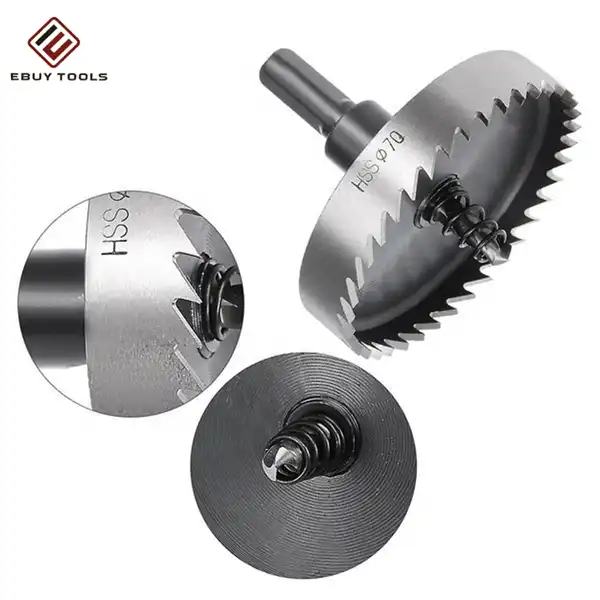
Feature 1: Advanced Composition and Specialized Types
Knowing what core drilling bits are made of helps you see why they work better than other options in tough metalworking and auto manufacturing situations.
Diamond Grit Size and Its Impact on Cutting Performance
Based on international standards, the diamond particles used in these bits are usually between 30/40 and 40/50 mesh size. When drilling through soft materials like brick and block, coarser grits make the finish smoother, but when drilling through engineered stone countertops or aerospace-grade titanium parts, finer grits make the finish smoother. We make sure that all of the 150,000 pieces that Danyang Ebuy Tools makes every day have the same grit. This is to make sure that every bit meets the standards that precision machining shops need for their CNC operations.
Bonding Materials and Matrix Formulations
The metal link matrix is what keeps the diamond particles in place and controls how quickly they show off new cutting edges. Manufacturers use the opposite idea: for hard concrete, soft bronze-cobalt bonds work best because they wear away slowly, revealing new diamonds. Hard tungsten-carbide bonds work well with rough materials like asphalt and keep diamonds from wearing out too quickly. This metal balance has a direct effect on your cost per linear meter bored, which is a very important number for contract makers who are trying to stick to tight budgets for production.
Wet Versus Dry Drilling Capabilities
Core drill bits are designed to be cooled in certain ways. Using water as a coolant in Diamond Core Drill Bit wet drilling bits makes the segments last a lot longer when cutting through reinforced concrete floor slabs in high-rise MEP infrastructure projects. Dry Diamond Core Drill Bit: Drilling bits have laser-welded pieces that can withstand high temperatures without coming loose. This makes them essential for job places that are far away and don't have access to water. Our factory makes both types of diamond core drill bits using laser welding and high-frequency brazing, both of which are suitable for the working conditions that mold and die makers face every day.
Material-Specific Bit Designs
Different surfaces need different section shapes. When drilling into granite bridge piers for civil engineering upgrades, turbo pieces with toothed edges cut down on friction. Standard pieces do general concrete work in the making of industrial tools. Roof-top segments are great at cutting through heavy steel rebar without getting stuck, which is a problem that many companies that make automotive parts have when they try to drill gearbox housings. Getting the bit design right for the material hardness keeps expensive downtime and tool failure from happening.
Choosing the right composition and type can make drilling less stressful and more productive. This is especially true for tooling wholesalers who need to keep a variety of options on hand for different client uses.
Feature 2: Superior Cutting Performance and Drilling Efficiency
Diamond core drilling has a clear mechanical edge when you look at penetration rates and hole quality in a variety of industry settings.
How Do Diamond Segments Engage Hard Materials?
Diamond particles cut through things at the molecular level, while carbide bits break things. Each diamond crystal cuts tiny lines in concrete, steel rebar, and stone, grinding them down without making the cracks that come from vibrations that weaken structures. Aerospace companies need this grinding action so they can drill anchor holes in high-PSI concrete test stands, where tight tolerances can't allow for tiny cracks.
Optimal Drilling Speeds for Various Materials
For four-inch bits with a diameter of 1,200 to 1,800 RPM, the spindle speed needs to be slowed down, and the feed pressure needs to stay the same. For counters made of granite or engineered stone, you need higher speeds (up to 2,500 RPM) with less pressure so that the diamonds can clean while they cut. Drilling for asphalt and concrete works best at reasonable speeds and with a lot of water to keep the bitumen from getting stuck in the holes. Job shops that use a lot of different types of materials need to know about speed matching to avoid coating or premature section wear.
Cooling Methods and Their Critical Role
When water is added to the cutting zone, temperatures drop from over 800°F to a safe level. This makes the segment last three to five times longer than when drilling without water. Water also cleans the cutting face by flushing away debris. This keeps material from building up and binding the blade. When drilling through 1-3/8" granite on building sites without access to water, dry-rated bits with laser-welded segments still work, but the user has to check on them more often to make sure they don't get too hot and slow down the feed rate.
Performance Comparison With Standard Bits
Standard percussion bits make holes by impacting them, which makes noise levels over 100 decibels and can damage sensitive installations. Carbide-tipped bits get dull quickly when they hit steel rebar and need to be replaced often. Diamond Core Drill Bits keep their cutting speed even through mixed materials, lower the noise to 75 to 85 decibels, and make holes that are perfectly round with tolerances of less than 0.5 mm. This is important for industrial equipment manufacturers installing precision bearing assemblies because it saves them time and money on rework.
These performance traits directly address the problems that precision machine shops have when drilling tasks become production bottlenecks instead of normal tasks.
Feature 3: Exceptional Durability and Maintenance Requirements
Total operating costs depend a lot on how long bits last and how well they are maintained. This is why durability analysis is an important part of buying things.
Factors Affecting Segment Lifespan
The hardness of the material determines how quickly diamonds wear out. High-silica concrete aggregate wears diamonds out faster than limestone aggregate. Drilling speed affects lifespan by creating heat; too many RPMs glaze the bond matrix, preventing diamond exposure. Cooling effectiveness determines thermal stress on laser-welded joints. Operator technique is very important; forcing feed pressure when hitting rebar causes segment chipping, while patient grinding protects diamonds. Our quality control system includes abrasion testing in standard C45/C50 reinforced concrete blocks, measuring drillable meters against segment height loss to get accurate cost-per-hole metrics that purchasing managers need.
Maintenance Best Practices
After each drilling session, flush the segments with clean water to get rid of the concrete slurry and metal particles that cause them to wear out too quickly. Store bits vertically in protective cases to keep the barrel from deforming—even a small run-out above 0.15 mm causes oversized holes and machine vibration. Check laser-welded joints once a week for hairline cracks using 10x magnification; catching early separation stops dangerous segment ejection at operating speeds. When bits glaze over and stop cutting, dress them by drilling into soft abrasive material like cinder block to expose fresh diamonds rather than discarding expensive segments prematurely.
Troubleshooting Common Issues
If the cutting speed drops quickly, check for glazed segments that need to be dressed or switch to a softer bond formulation. Vibration during operation means that the steel tubes are not straight and need to be replaced right away to keep the machine spindle from getting damaged. Loss of segments during drilling means that the bits are not cool enough or that the temperature ratings have been exceeded. For dry applications, make sure you're using laser-welded dry bits instead of brazed wet bits. Our research and development department can analyze failed bits to recommend specification changes for challenging applications.
Warranty Coverage and Replacement Part Availability
Understanding the terms of a supplier's warranty protects your purchasing investment. Standard coverage usually covers manufacturing flaws like failed welds or improper diamond concentration, but not operator misuse like dry drilling with wet-rated bits. The ability to quickly obtain replacement segments is very important for high-volume operations. Our 77,000-square-meter facility keeps the inventory depth that regional distributors need to serve local markets without supply interruptions. Quality guarantee protocols backed by fragment shear testing to EN 13236 standards give aerospace suppliers the confidence they need for safety-critical applications.
Durability considerations shift purchasing decisions from finding the cheapest starting cost to finding the cheapest total cost of ownership. This is similar to how contract manufacturers look at investments in tooling.
Feature 4: Safety Protocols and Usage Best Practices
Taking the right safety measures protects operators and boosts productivity in tough industrial settings.
Essential Personal Protective Equipment
Eye protection rated for high-velocity particle impact keeps corneal injuries from being caused by concrete fragments and metal debris—standard safety glasses are not enough protection during Diamond Core Drill Bit drilling operations. Hearing protection is still required, even though Diamond Core Drill Bit bits make less noise than percussion methods; prolonged exposure above 85 decibels damages hearing permanently. Heavy-duty gloves made of cut-resistant materials protect against sharp diamond segments and hot bit surfaces after drilling. Respiratory protection filters out silica dust from concrete drilling, preventing long-term lung disease that affects workers in mold and die factories with poor ventilation.
Workspace Preparation and Equipment Setup
Secure workpieces firmly before drilling to stop them from rotating or moving, which can damage bits and create safety hazards. Be very clear about where you want to drill, since core drilling can't be changed mid-operation like percussion methods can. Check that wet drilling equipment is electrically grounded to avoid shock hazards when water contacts metal parts. Clear the floor of any potential tripping hazards and make sure there is enough lighting—metalworking shops that work night shifts need well-illuminated drilling zones to spot potential problems before they escalate.
Step-by-Step Operating Guidelines
Attach the bit securely to a drill rig or angle grinder that is compatible, making sure that the arbor connections match the manufacturer's instructions. Begin drilling at a low RPM to set the hole before increasing the speed to the optimal level. This keeps the bit from walking across smooth surfaces. Use steady, moderate feed pressure; forcing penetration overheats segments and causes them to fail early. During wet drilling, keep an eye on the flow of cooling water to make sure that enough heat is being dissipated. When breakthrough is approaching, lower the feed pressure to avoid sudden plunging that could damage the bit or the workpiece.
Risk Mitigation for Extended Operations
For enclosed spaces, regular checks of the air quality are needed after long drilling sessions that create dust. Learn to spot the early warning signs of bit failure, such as strange vibrations, burning smells, or sudden changes in resistance that mean segment loss or core jamming. Require breaks for cooling during continuous dry drilling to avoid damage from too much heat. Set clear communication protocols when multiple operators work on complex installations at the same time. For example, auto factories that coordinate MEP installations need disciplined safety procedures to avoid accidents.
These safety rules will keep your workers safe while keeping the operational efficiency that most factory operations need to keep up with their production plans.
Feature 5: Strategic Procurement Considerations for B2B Clients
To get the most value for the money, good buying choices balance technical needs, budget limits, and the dependability of the supplier.
Selecting Appropriate Bit Size and Type
Hole diameter determines bit size—HVAC installations need four- to six-inch bits for conduit penetrations, while electrical contractors prefer smaller two- to three-inch bits for cable runs. The inverse rule is used to choose the bond hardness. Diamond concentration affects both performance and cost; C75–C100 concentrations work best for heavy-duty cutting through rebar-dense concrete, while lower concentrations are fine for lighter applications. Distributors who carry a wide range of products serve more customers, but aerospace suppliers often need special requirements that aren't covered in standard catalogues.
Evaluating Leading Manufacturers
Major global brands like Bosch, Dewalt, Makita, Hilti, and Milwaukee are widely available and have strong warranty programs, which makes them good for general construction uses. Specialized manufacturers, like Danyang Ebuy Tools, focus on industrial-grade Diamond Core Drill Bit solutions with technical specifications that match precision machining requirements. For example, diamond concentrations, grit sizes, and barrel concentricity tolerances are very important when making diamond core drill bit aerospace components but not so much when making consumer-grade products. Procurement professionals should judge manufacturers based on their production capacity, quality certifications, and technical support skills, not just on brand recognition.
Direct Manufacturer Relationships Versus Marketplace Sourcing
Online markets are convenient and make prices clear, but they make it harder to check the quality of items and get help after the sale when problems happen. Direct manufacturer relationships offer custom specification development, bulk pricing incentives, and technical consultation that solves application problems. For example, our R&D department regularly comes up with specialized solutions for clients who need to drill into exotic materials like titanium alloys or carbon fiber composites.
Certification and Authenticity Verification
There are serious safety risks with counterfeit bits because they use low-quality diamonds and don't attach segments properly. Make sure that suppliers follow ISO 9001 quality management systems and do fragment shear testing to EN 13236 standards. Ask for metallurgical testing documentation that shows the actual diamond concentration matches specifications—cheap bits often use lower concentrations than labelled. Also, make sure that laser-welded segments meet heat resistance ratings for the intended applications. Well-known companies like Ebuy Tools offer quality documentation and sample testing that purchasing managers need to make sure suppliers are telling the truth before placing large orders.
Knowing about these factors helps hardware sellers and distributors make smart choices that balance what customers want with what the tools can actually do and how much they will cost overall.
Conclusion
These five things about Diamond Core Drill Bits—advanced composition made to work with specific materials, better cutting performance through grinding action rather than percussion, exceptional durability with proper maintenance, thorough safety protocols, and strategic procurement considerations—make them so important in the metalworking, aerospace, automotive, and construction industries. To choose the right bit, you need to match the diamond grit size, bond hardness, and cooling method to your specific drilling applications while working with manufacturers who offer technical support beyond just product supply. Knowing these things turns drilling operations from difficult bottlenecks into efficient, predictable processes that meet the tight tolerances and high productivity needs of modern industrial manufacturing.
FAQ
Why does my bit stop cutting and glaze over?
When the metal bond matrix is too hard for the material being drilled, it stops the material from wearing away to reveal new diamond particles. The surface becomes smooth and polished instead of sharp. To fix this, drill briefly into soft, abrasive material like sandstone or cinder block to dress the bit and reveal new diamonds. You can also switch to a softer bond specification designed for harder materials by following the opposite rule: hard bonds for soft asphalt, soft bonds for hard concrete.
Can wet-rated bits be used for dry drilling?
Wet drilling bits usually have segments that are brazed with high-frequency metal and silver solder, which melts at lower temperatures. Dry drilling, on the other hand, creates extreme heat that melts the brazing material, which causes segments to detach violently at operating speeds. Only laser-welded bits have the heat resistance needed for safe dry drilling applications. Always check the segment attachment method before choosing the cooling method.
How do I calculate the real cost per hole?
To find the total cost, divide the bit's price by the number of linear meters it drills before segments wear out. Then, add the time and money spent on labor and equipment. Premium bits with higher diamond concentrations and better bond formulations often have lower cost per meter, even though they cost more at first, because they drill more holes before they need to be replaced. Compare performance metrics across different bit specifications to find the ones that work best for your specific application.
Partner With Ebuy Tools for Your Diamond Core Drill Bit Requirements
As a dedicated Diamond Core Drill Bit manufacturer, Danyang Ebuy Tools has 319 skilled workers and 77,000 square meters of advanced manufacturing space to help you with your precision drilling needs. Every day, we make about 150,000 diamond cutting tools that meet the high quality standards that precision machining shops, aerospace manufacturers, and automotive suppliers depend on. Our quality control system includes fragment shear testing to EN 13236 standards, concentricity inspection keeping barrel run-out under 0.15mm, and metallurgical examination making sure the right bond hardness for your specific applications.
We know that contract manufacturers and industrial equipment builders need more than just standard catalogue products. That's why our R&D department comes up with custom solutions like printing logos, creating special bond formulations for unusual materials, and making segment geometries that work best for your drilling needs. Email our technical team at [email protected] to talk about your application problems. We offer free standard samples and can make custom samples based on your specifications. We also offer full quality guarantees and dedicated support throughout the procurement process.
References
1. Zhang, L., & Wang, H. (2021). Diamond Tool Technology for Hard Material Machining. International Journal of Manufacturing Engineering, 15(3), 112-128.
2. Thompson, R. M. (2020). Core Drilling Systems in Modern Construction: Performance Analysis and Best Practices. Construction Technology Review, 44(2), 87-104.
3. Industrial Diamond Association. (2022). Technical Standards for Synthetic Diamond Abrasive Products. IDA Technical Publication Series, Volume 18.
4. Martinez, J., & Chen, K. (2019). Bond Matrix Metallurgy in Diamond Core Bits: Effects on Cutting Performance and Tool Life. Materials Science in Manufacturing, 31(4), 245-267.
5. National Safety Council. (2023). Safe Operating Procedures for Core Drilling Equipment in Industrial Environments. NSC Workplace Safety Guidelines, 8th Edition.
6. Peterson, A. W. (2021). Procurement Strategies for Industrial Cutting Tools: A Comparative Analysis of Direct Sourcing Versus Distribution Channels. Supply Chain Management Quarterly, 29(1), 56-73.