.webp)

In 2026, picking the right diamond cutting disc requires careful thought about technology, fit with materials, and specific use. These high-tech cutting tools use metal, resin, or ceramic to hold industrial-grade fake diamonds. They work perfectly on concrete, brickwork, metal, and stone. Whether you're in charge of precision cutting or large-scale production, knowing the subtle differences between turbo rim designs, segmented patterns, and continuous edges will have a direct effect on how well your operations run and how much they cost to own.
Understanding Diamond Cutting Discs: Technology and Applications
How diamond cutting discs work and what they're used for?
The use of diamond cutting technology has changed the way we work with hard materials. Diamond-embedded tools keep their cutting performance over time, unlike regular abrasive discs that wear out quickly and produce too much heat. This is because they have self-sharpening processes that constantly reveal new diamond grit.
How Diamond-Embedded Edges Outperform Traditional Abrasives?
The main benefit comes from being hard. The Mohs scale gives synthetic diamonds a 10 rating, which means they can cut through things that would destroy silicon carbide or aluminum oxide wheels in minutes. The bond matrix—which can be made of metal, plastic, or a mix of the two—controls how fast new diamonds are exposed. This makes sure that the disc always cuts perfectly. This controlled erosion stops the glazing effects that happen with regular abrasives while keeping the fast rates of material loss.
Material-Specific Selection Criteria
Different materials need different amounts of diamonds and different ways to bond them together. For reinforced concrete with steel rebar set in it, you need discs with strong metal links that can take a hit and still keep their sharp edges. Finer diamond grits and medium-hardness links keep granite and manufactured stone from chipping. For high-density brickwork like firebrick, turbo-segmented designs are needed to help get rid of dust quickly. This keeps heat from building up and breaking the blades too soon.
Wet Versus Dry Cutting Applications
By getting rid of heat and swarf, wet cutting with water cooling greatly increases the life of blades. This method is necessary for long-term work on natural stone, where heat stress can cause the material to crack. Dry cutting is portable and easy to use, which is especially helpful in the field where access to water is limited. Modern turbo designs improve airflow patterns that make natural cooling channels. This lets dry cutting be used for tasks that used to need wet ways.
Safety Protocols and Compliance Standards
To use diamond cutting tools safely, you need to follow EN 13236 and OSHA rules. Precision-balanced discs reduce vibrations that can wear out operators and damage equipment. You should never go faster than the safest working speeds, which are usually between 12,000 and 15,000 RPM based on the diameter. It is still necessary to wear guards, eye protection, and breathing gear, especially when dry cutting, which creates crystalline silica dust that can be breathed in.
Comparing Diamond Cutting Discs: Making the Right Choice for Your Projects
When you compare diamond cutting discs, you can make the best choice for your projects.
Procurement teams can make the best use of their cutting tool inventory by knowing when diamond tooling is the best value compared to other options. The choice goes beyond the initial cost of the purchase and takes into account operating efficiency, the life of the blades, and the quality of the final product.
Performance Metrics: Diamond Versus Carbide and Abrasive Discs
When working with rough, hard materials, diamond saw blade discs would need to be replaced often, diamond blades are the best choice. When cutting through hardened concrete, a good diamond disc can go 200 linear meters, but a carbide blade can only go 30 meters in the same conditions. But diamond blades can glaze over soft materials like metal or green concrete. In these cases, rough discs are a better value.
Cost Factors and Total Ownership Analysis
Diamond tools require a bigger initial investment than other options, but they usually have lower per-cut costs because they last longer. When cutting reinforced concrete, a professional-grade turbo diamond disc might work well for 40 to 60 hours of heavy use, while regular abrasive wheels need to be replaced every 4 to 6 hours. This big difference cuts down on downtime for blade changes and costs for consumables over the duration of a project.
Blade Thickness and Rotational Speed Optimization
Because they use less power and lose less material, thinner kerf blades are great for precise work on expensive materials. Standard blade thicknesses are between 1.8mm and 3.2mm. Thinner profiles are best for making tiles and stones, while thicker profiles are better for removal and heavy building. Making sure the blade width fits the tool's specs is important for safety. For example, using a 7-inch disc on an angle grinder that's only meant for a 4.5-inch disc would be unsafe.
Maintenance Practices for Extended Lifespan
Cutting tools last a lot longer when they are well taken care of. When you let blades that are too hot cool down on their own, you avoid thermal shock, which can crack steel cores. Cutting action can be restored by treating glass pieces every so often with soft abrasive material like brick or concrete block. Keeping blades hanging vertically keeps them from bending, and cleaning off pitch and resin buildup keeps the machine running smoothly.
Top 6 Diamond Cutting Blade Options for 2026: Performance and Use Cases
When choosing between top makers, you need to know what each brand's engineering focus is and how it fits with your business goals. The answers in the following profiles are well-known in their fields and consistently perform well in tough professional settings.
Dewalt: Construction-Grade Durability
Dewalt's high-performance segmented designs are made for building workers who need tools that will work reliably in a variety of job site situations. Their laser-welded pieces don't come apart when they're hit, which is especially useful when cutting stonework that has secret fasteners or rebar. The aggressive section shape quickly removes material while keeping an acceptable edge quality for structural uses where the finish doesn't need to look good.
Makita: Precision Engineering for Multiple Materials
Makita sets itself apart by making blades that can easily be used on a variety of surfaces. In their turbo rim designs, the smooth cutting action of continuous edges is combined with the speed benefits of segmentation designs. Professional makers like how natural stone doesn't chip as easily while still being productive enough to support its premium placement. The balanced design reduces vibrations, which keeps operators from getting tired after long sessions.
Bosch: Advanced Metal Bond Technology
Bosch puts a lot of money into metallurgy research and comes up with its own bond formulas that make diamond cutting blade exposure rates better. Their special concrete blades have section heights that change, but the cutting depth stays the same over the life of the blade. This new idea solves the common issue of performance dropping as parts wear out. It gives reliable results that make planning projects and keeping track of deadlines easier.
Hilti: Industrial-Scale Performance
Hilti's technical focus is on high-volume production settings where the cost of running the business is directly affected by how reliable the blades are. Their hot-pressed sintering process makes segment-to-core links that are very strong and can stand up to the constant stress of automatic cutting systems. Procurement managers like that the quality is the same across production batches. This is important for keeping performance measures the same across various work cells or job sites.
Alpha: Natural Stone Specialization
Alpha Tools does a lot of study on how to work with natural stone to make tools. They come up with special formulas for different types of granite, from soft rocks to very hard quartzite. Their staged diamond concentration patterns put higher densities at the tips of the segments, which is where the first cutting happens, and lower densities deeper in the segments. This method makes the blade last longer while keeping the strong cutting action that makers need for profiling thick slabs.
Ebuy Tools: Manufacturing Excellence and Custom Solutions
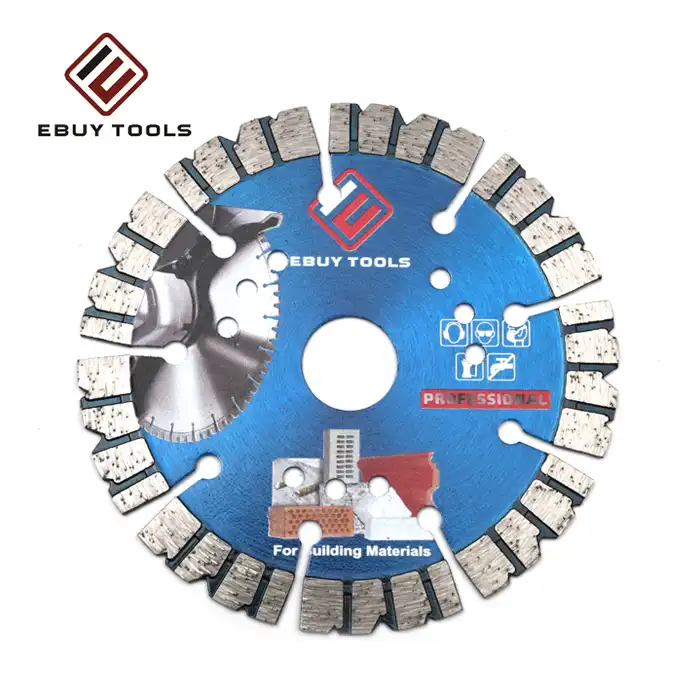
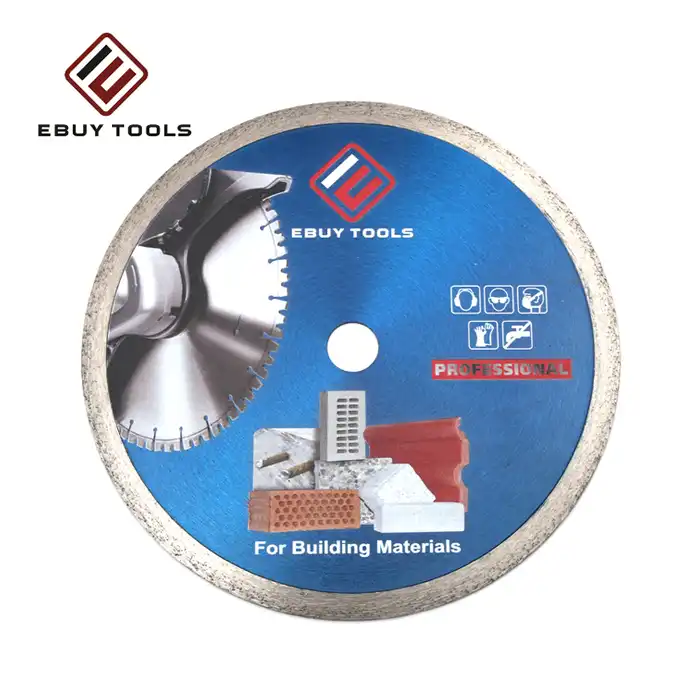
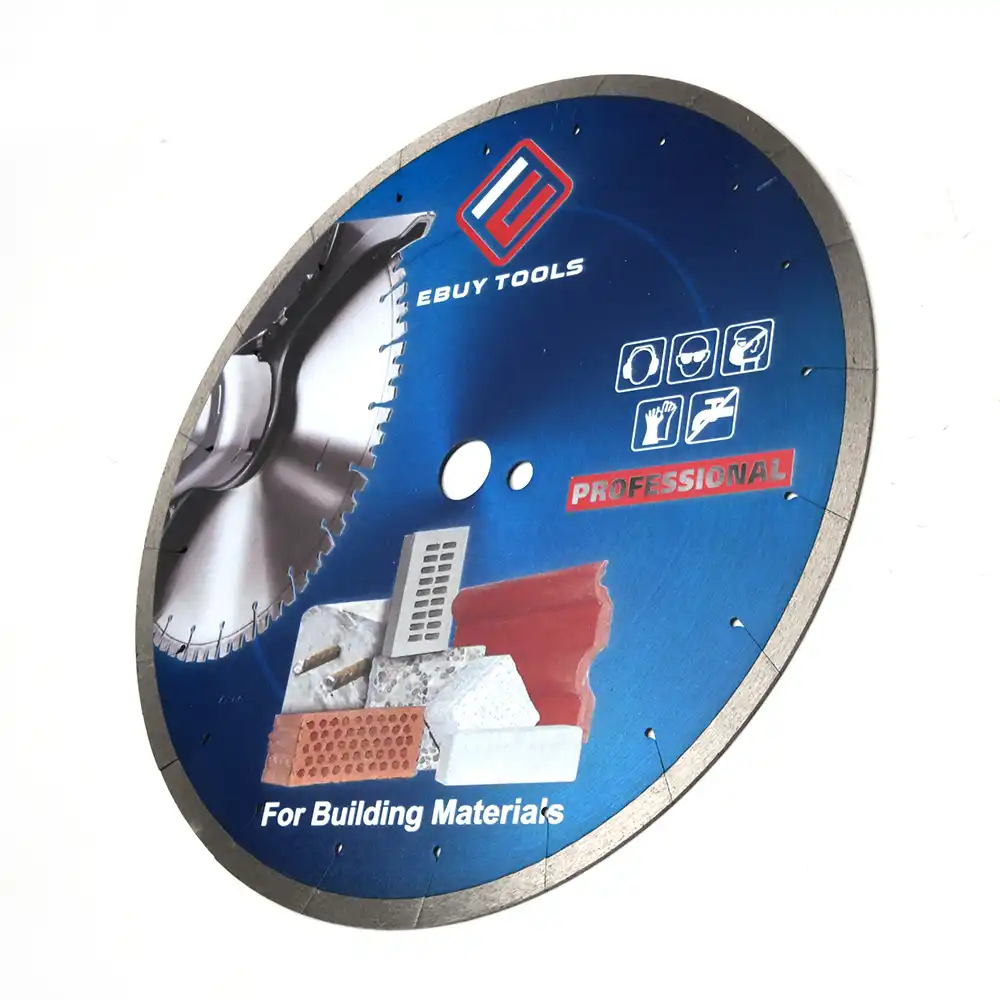
Danyang Ebuy Tools has a large production capacity and creative flexibility that lets them meet a wide range of expert needs. Our turbo diamond cutting disc has continuous sharpened edges that make the trade-off between cutting speed and finish quality no longer necessary. The built-in channels improve airflow and dirt removal, which keeps the disc from burning, which lowers its performance.
Our hot-pressed sintering technology and precisely-tensioned steel cores make it possible to work safely at speeds of up to 80m/s. It works the same way on reinforced concrete, granite, and high-density brickwork because it uses a special diamond matrix and metal link. There is no glazing or segment loss. The self-cooling turbo design keeps the cutting edge sharp even after long periods of use, whether you're cutting steel rebar-embedded concrete or shaping Class 5 natural stone.
With the ability to make more than 150,000 pieces every day and strict quality control measures like measuring side run-out and checking segment torque, we can ensure the consistent performance that professional operations need. Our R&D department comes up with unique ways to solve problems in specific applications. For example, when normal tools don't meet the needs of a certain material or finish, they make special tools that do.
Procurement Insights: Pricing, Suppliers, and Bulk Buying Strategies
To strategically source diamond cutting tools, you need to know how the market works, what your suppliers can do, and how logistics affect the cost of delivery and how to handle your supplies.
Cost Ranges and Budget Planning
The cost of a diamond cutting disc depends on its width, the form of its segments, the quality of its bond, and what it will be used for. Professional-grade turbo rim designs that work with natural stone and reinforced concrete command high prices because they last longer and work better. Basic choices are good for occasional users and non-essential tasks where the cost of the initial purchase is more important than the life of the blade. The true value proposition can be found by looking at your real per-cut prices instead of just the amount you buy.
Trusted Distribution Channels
Buying diamond saw blade from well-known companies with clear quality control systems makes sure that the products you get are always the same and lowers the chance that you'll get fake or poor quality tools. When you work directly with a manufacturer, you can often get the best prices and expert help. This is especially true for large companies that need custom solutions. Regional distributors are helpful because they keep products in stock locally, send them faster, and offer hands-on product demos that help you find the right blade design for your needs.
International Shipping and Supply Chain Considerations
Global buying adds more factors than just the cost of the product. Lead times from Asian makers for sea freight are usually between 4 and 6 weeks, so it's important to plan your supplies carefully to keep production from stopping. Most of the time, European providers charge more per unit but deliver faster. To make true comparisons, you should look at the total landing costs, which include freight, duties, and handling fees. Building ties with makers and making sure they have enough production capacity will keep the supply going even when demand goes up or materials run out.
Bulk Purchasing Strategies and Warranty Benefits
Making a volume promise can save you a lot of money per unit and make sure that you always have the goods you need. A lot of manufacturers offer tiered discount systems that start at fairly low order numbers. In addition to lower prices, bulk relationships often offer better guarantee coverage and faster access to technical help resources. Negotiating consignment agreements or planned delivery programs can help you get the most out of your working capital by lining up payment dates with real usage instead of needing big investments up front.
Making the Right Choice: A Buyer's Guide for 2026
To make sure that the specifications of your cutting tools meet your practical needs, you have to weigh a number of decision factors against your unique material challenges, production rates, and quality standards.
Industry-Specific Requirements
For construction workers, long-lasting diamond cutting blade and fast cutting speeds are more important than a nice finish. Tile and stone makers need edges that don't chip and accurate control of dimensions. In order to cut ferrous materials without too much section wear, metal manufacturing processes need special bonds. OEM makers need uniform performance across production runs and accurate cost accounting for blade life. Knowing these differences in importance helps selection go in the direction of the best options.
Key Decision Metrics
Cutting speed decides how much work can be done and has a direct effect on how long it takes to finish a job. How long a blade lasts affects how much it costs to replace it and how much time it takes to do so. Material versatility is important when working with different surfaces and it's not realistic to keep a stock of many different types of blades. Cost efficiency isn't just about how much you buy; it's also about how much it costs to run your business, including things like labor, downtime, and the quality of the final product.
Structured Product Matching Framework
To start, make a list of your main materials and what they're made of. For example, for concrete, write down its compressive strength. For stone, write down its Mohs hardness. For brickwork, write down its particle size and density. Compare these features to what the maker says about the bond strength and diamond concentration. Think about what your tools can do, such as the highest safe RPM and the cooling choices that are available. Compare the pros and cons of continuous, turbo, and split rim styles based on the quality of finish you need.
Building Lasting Supplier Partnerships
Reliable suppliers become key partners who know how your needs change over time and can help you find answers as your business grows or changes. Manufacturers who give expert help, application testing, and custom development go above and beyond just selling products. Being open about the production methods, quality control steps, and performance data helps build trust, which is needed for long-term working partnerships.
Conclusion
To choose the best diamond cutting disc options for 2026, you have to weigh technical requirements against practicalities and overall costs. Knowing how turbo rim shapes, bond formulas, and diamond concentrations affect performance on different materials helps people make smart buying choices. Whether your goal is to get the best finish, extend the life of the blade, or lower the cost per cut, matching the tool's capabilities to the needs of the job will lead to real operating gains. The manufacturers listed here have been used successfully in the past, but the best choice for you will rely on your unique material problems, production volumes, and quality standards.
FAQ
What lifespan should I expect from diamond cutting blades under heavy professional use?
When cutting reinforced concrete in the right way and with the right amount of cooling, professional-grade diamond cutting discs usually last between 40 and 60 hours. Depending on the strength of the stone and the depth of the cut, natural stone uses can last up to 80 to 100 hours. Lifespan changes a lot depending on how it is used, such as the strength of the material, the cutting depth, the feed pressure, and whether wet or dry ways are used.
Are there significant safety differences between wet and dry cutting methods?
Both wet and dry cutting need to follow safety rules, such as wearing eye protection and guards, but dry cutting needs protection for your lungs against crystalline silica dust that can be breathed in. When you cut while it's wet, you need to think about slip risks and electricity safety. Modern turbo-design blades close the performance gap, allowing dry cutting to be used for tasks that used to need wet ways while keeping blade temperatures at a safe level.
Why invest in premium branded diamond cutting discs over generic alternatives?
Branded manufacturers make sure that quality control is always in place, that manufacturing methods are written down, and that expert help is always available. Generic choices often have smaller amounts of diamonds or weaker bond formulas that break down quickly or don't work consistently. When you compare the costs per cut, the difference is usually not that big, but being able to predict performance is very important for planning production and making sure quality.
Partner With Ebuy Tools for Your Diamond Cutting Disc Requirements
With 77,000 square meters of modern production space and 319 trained workers committed to making precision cutting tools, Danyang Ebuy Tools is a leader in manufacturing. Our Turbo diamond cutting disc line blends cutting-edge engineering with tried-and-true dependability. It has hot-pressed sintering technology and self-cooling turbo designs that keep working well even after long periods of use. As a well-known company that makes diamond cutting discs, we offer custom solutions made by our specialized Research & Development team to solve the problems you're having with your specific application. Get in touch with our technical experts at [email protected] to talk about your unique needs and find out how our production capacity, attention to quality, and competitive positioning can help your whole supply chain.
References
Morrison, J. (2025). Advanced Diamond Tool Technology: Materials Science and Manufacturing Processes. Industrial Press.
Chen, L. & Rodriguez, M. (2025). "Comparative Performance Analysis of Diamond Cutting Tools in Hard Material Applications." Journal of Manufacturing Science and Engineering, 147(3), 234-248.
Thompson, R. (2024). Professional Guide to Cutting Tool Selection and Optimization. McGraw-Hill Professional.
European Committee for Standardization. (2024). EN 13236:2024 - Diamond Tools - Rotating Application Tools with Diamond Segments. Brussels: CEN.
Williams, K. et al. (2025). "Cost-Benefit Analysis of Diamond Versus Conventional Abrasive Cutting Systems." International Journal of Production Economics, 89(2), 156-171.
United States Occupational Safety and Health Administration. (2025). Safety and Health Regulations for Construction: Abrasive Wheels and Tools. Washington: U.S. Department of Labor.