.webp)

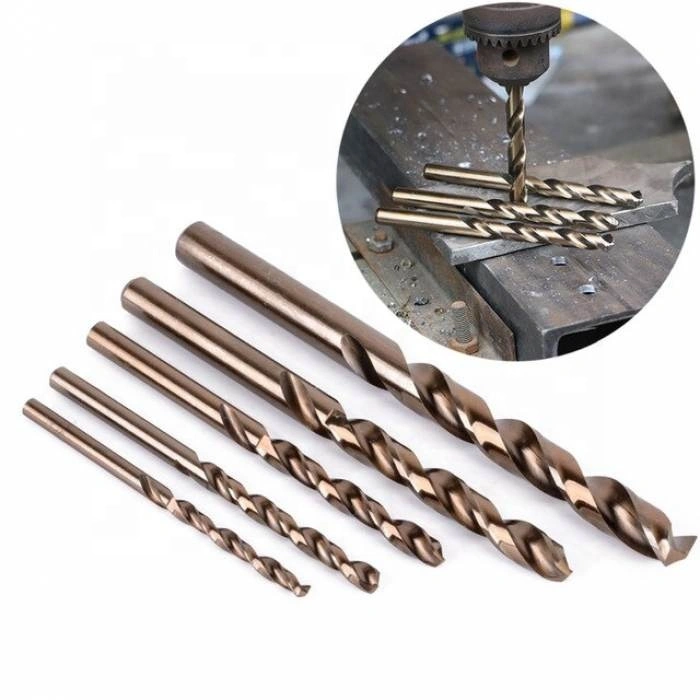
Which 118° or 135° split point high speed steel twist drill bit type you choose depends on the needs of your application. The 118° arrangement works best with soft materials like aluminum and mild steel, getting rid of chips quickly and well across a wide range of basic machining jobs. Also, the 135° split point design centers itself automatically on stronger metals like titanium alloys and stainless steel. This lowers the thrust force and keeps the bit from walking across the surface of the object. Understanding these geometric differences helps procurement managers choose the best tools for their work environments while keeping prices, performance, and reliability in mind.
Understanding the Basics of HSS Twist Drill Bits
How to Use HSS Twist Drill Bits Correctly
Since they were first made, high speed steel drill bits have changed the way welding is done in factories. When tungsten, molybdenum, chromium, and vanadium are mixed in exact amounts in these tools, they make metals that keep their cutting edge even when the tip of the tool gets hotter than 600°C. This is what metallurgists call "red hardness."
What Defines High Speed Steel Material Composition
The mechanical makeup of HSS drill bits is what makes them work. Standard M2 grade high speed steel has a Rockwell hardness of 63 to 65 HRC and is made up of about 6% tungsten, 5% molybdenum, 4% chromium, and 2% vanadium. This well-balanced mix is very resistant to wear and tear while still keeping the structure toughness needed for drilling. When your shop has to work with superalloys or materials that harden over time, cobalt-enhanced types like M35 (5% cobalt) and M42 (8% cobalt) can handle temperatures up to 650°C and hardness levels up to 66–68 HRC. These materials have a specific gravity between 8.15 and 8.25 g/cm³, which helps them stay stable when they are spinning quickly.
The Role of Split Point Geometry in Drilling Performance
The split point shape changes the way a drill bit first touches the workpiece in a basic way. To keep the chisel edge from rolling across the material, traditional conical tips need a center punch mark. The split point change, which is made possible by precise grinding, adds two more cutting edges that meet in the middle, getting rid of the knife edge that doesn't cut. Compared to regular points, this form cuts the axial thrust force needed for entry by about 30 to 40 percent. The touch area, pressure spread, and ability to center itself are all affected by the angle of this split point, which can be 118° or 135°. The normal helix configuration (Type N) for both angles is 30°, which is best for balanced chip evacuation in steel uses. However, this can be changed for other materials.
How Point Angles Affect Drilling Mechanics
The choice of point angle has a direct effect on how the cutting works and the quality of the hole. The included angle, which is found between the two main cutting edges, changes how the forces are spread across the cutting lips during entry. When you make the angle bigger, the cutting edge length gets shorter for the same diameter. This concentrates the cutting forces and raises the unit pressure at the contact zone.
This connection between geometry and physics shows why different angles work better for certain ranges of material strength. By changing the web width at the drill tip, the split point feature adds another dimension. This makes the cutting action more violent while reducing the tendency to walk. At Danyang Ebuy Tools, we use precise grinding methods to keep the changes in cutting lip heights between 0.02mm and 0.05mm. This keeps the load evenly distributed and the tool's life longer for all of our daily production of 150,000 pieces.
Key Differences Between 118° and 135° Split Point HSS Twist Drill Bits
Knowing the differences in performance between these two shapes can help you choose the right tools for the job. Both designs are very important for industrial drills, but they behave mechanically in very different ways.
Penetration Characteristics and Feed Force Requirements
The 118° split point design makes the angle with the workpiece more sharp. This makes the cutting edges longer and spreads the force over a larger area. This shape works really well with soft materials where the resistance to entry is still pretty low. When drilling aluminum alloys, brass, and carbon steels below 30 HRC hardness, your workers will notice that the entry is easier and there is less vibration. At the suggested speeds, feed forces for 10 mm bits made of mild steel are usually between 800 and 1200 N.
Material Compatibility and Cutting Conditions
The 135° split point changes how drilling works in harder materials. The wider angle makes the cutting edge shorter and stronger by concentrating force into a smaller contact zone. This is important for cutting through work-hardening materials like austenitic stainless steel (304/316 grades) and precipitation-hardened alloys. The self-centering feature is especially useful in CNC work, where accurate hole placement is important. Feed forces can be 15-20% higher than with 118° bits in the same materials, but positional accuracy is better and cycle time is shorter because there are no center drilling operations.
By choosing the right angle based on the properties of your material, you can keep hole quality standards and keep your tool from breaking down too soon. In production settings, the connection between the stiffness of the workpiece, its ability to conduct heat, and its ideal point shape is very important.
Uses and Conditions for 118°:
When the Brinell hardness of the material is less than 200 HB, this design really shines. The balanced cutting action works well on aluminum metals (6061 and 7075), copper, brass, and light structural steels. For steel, surface speeds should be between 25 and 35 meters per minute. For aluminum, they should be between 60 and 90 meters per minute. Cutting fluids should focus on getting rid of chips; coolants that dissolve in water work well. High speed steel twist drill bit geometry extends the tool life under these conditions, but longer cutting edges make more heat per unit area, so it's important to keep an eye on the temperature during ongoing activities.
135° Uses and Information About It:
The 135° shape is necessary when working with stainless steels, titanium alloys (Ti-6Al-4V), Inconel, or strong tool steels above 35 HRC. The split point design makes it less likely that materials that harden will bend the bit when it first touches them. For stainless steel, the surface speed drops to 15–25 meters per minute, and for titanium, it drops to 10–15 meters per minute. Cutting oils that are sulfurized or synthetic coolants with chemicals for high pressure are needed. In these tough jobs, our TiAlN-coated M42 cobalt bits work better than others because they keep their edges even in the rough cutting zones that these materials make.
These changes in cutting conditions have a direct effect on your quality measures and production costs. By understanding them, buying teams can choose the right geometry from the start, which saves money because tools that break down in the middle of an activity don't have to be replaced.
Tool Durability and Maintenance Considerations
Based on how they are loaded mechanically, these shapes have very different qualities of durability. With its longer edges and spread-out cutting forces, the 118° design wears more slowly in the right situations. Edge recession usually happens in a reliable way, which makes resharpening on a regular plan easy. Mild steel can handle 200 to 400 holes before they need to be fixed, but this depends on the width and depth.
The 135° split point puts most of the stress at the tip, which makes it more likely to chip if it is used wrong in soft materials or with too fast of a feed rate. But when used with the right harder surfaces, the robust shape actually makes tools last longer by stopping edges from breaking. In rough materials, the shorter cutting edges stay sharp longer. To keep the complicated split point shape during resharpening, you need special tools. This is something to think about for shops that don't have their own tool grinding facilities.
Modern finishes make both forms better. TiN processes, which make the surface look like gold, raise the hardness to 3000 HV and lower the friction coefficients to below 0.4. This makes the tools last 25–30% longer. TiAlN coatings raise the working temperature, which is important for the hot conditions that are formed when drilling stainless steel. At Ebuy Tools, we make sure that every bit goes through a strict dimensional checking process that follows DIN 338 and ASME/ANSI B94.11M standards. Tolerance classes are kept within h8 limits for diameter precision across both point angle setups.
How to Choose the Right HSS Twist Drill Bit Split Point for Your Business Needs
To make smart purchasing decisions, you need to make sure that the features of the drill bit match up with how they will be used—and for general-purpose applications, a high speed steel twist drill bit offers a reliable balance of cost and performance. This organized method helps you figure out which shape will work best for your particular situation.
Defining Your Application Requirements
Start by making a list of all the things that come into your shop. Write down the hardness numbers, the average widths, and the hole diameter ranges. A job shop that works with a variety of materials has different needs than a car source that drills a lot of cast iron engine blocks. Think about what your equipment can do. For example, older manual drilling machines might not be stiff enough for strong 135° split point penetration rates, but newer CNC machining centers can fully utilize their self-centering benefits.
Geometry choice is also based on quality standards. The consistent entry features of 135° bits make them useful for aerospace uses that need holes to be placed accurately (within ±0.05mm) and have a surface finish value below Ra 3.2. When making structures with lower standards, the chip evacuation efficiency of 118° forms may be given more weight. Environmental factors are also important. For example, when small magnetic drilling units are used in the field, they can be hard to align and deal with vibrations. 118° bits are flexible and avoid catastrophic tool failure.
Procurement Criteria: Balancing Performance and Cost Efficiency
When you decide what to buy, you should think about the total cost of ownership as well as the original price. The economic math that procurement managers have to solve is made up of a number of things.
When workpiece specs change, hardness variation becomes very important. If the inbound material's hardness varies erratically, which can happen with gray cast iron or welded parts, buying 135° cobalt-grade bits will protect you from breaking too soon when you hit hard spots. The bigger original investment pays off because there is less downtime and waste.
The required drilling speed is based on the production number goals. For high-volume operations, expensive TiAlN-coated bits that keep working well over long runs are a good choice. On the other hand, prototype shops that do a lot of different types of low-volume work may value flexibility. How long you expect a tool to last depends on how well you can maintain it. For example, shops with skilled tool room staff can make HSS bits last longer by resharpening them multiple times, which greatly improves cost-per-hole measures.
Danyang Ebuy Tools makes both shapes in normal M2 and cobalt-enhanced M35/M42 grades in high speed steel twist drill bit form. Depending on the grade, the Rockwell hardness stays between 63 and 68 HRC. Our 319 trained workers and 77,000-square-meter facility make sure that the quality of all of our big orders is always the same. Because our bits have a balanced metallic microstructure, they don't break right away when they're subjected to the shaking and torque loads that are common in production settings. This directly addresses the reliability concerns that procurement managers have.
Decision Matrix: When to Select 118° vs 135° Configurations
A systematic choice process makes it easier to come up with specifications. Take a look at these situations where each shape is useful in its own way:
Choose the 118° Split Point When:
Most of the materials you can use are aluminum, brass, copper, plastics, and light steel below 30 HRC. The longer cutting edges work best with these materials because they make clean chips and let air flow easily. The flexible cutting properties are good for job shops that want to be able to work with a variety of materials. Lower feed force needs and less vibration are good for operations that use older equipment or portable drilling tools. Because of limited funds, the slightly lower cost that still produces skilled results is preferred. It is easier to resharpen the shape in-house without having to use special cutting tools.
Choose the 135° Split Point when:
Your production plan is mostly made up of stainless steel, titanium, hardened metals, or materials that get harder with use. The ability to self-center is important for making sure that holes are placed accurately, especially when using a CNC machine to skip the center drilling steps. The stiffness of your tools lets it handle slightly higher feed forces. For a surface finish to work, the entry traits must be uniform. When drilling on curved or slanted surfaces, it's important to keep people from stepping on them. The strong shape of the tip makes it better able to handle the shock of breaking through holes in plate materials.
This decision framework turns vague requirements into buying strategies that can be put into action. Knowing these connections lets you defend spending on tools with data-driven reasoning that links choosing the shape directly to how well it works and how much it costs.
Conclusion
When choosing between 118° and 135° split point high speed steel twist drill bit configurations, you need to think carefully about the properties of the material, the powers of your tools, and the quality standards you need to meet. The 118° shape gives it good performance on a range of softer materials, with good chip evacuation and lower feed force needs. This makes it perfect for job shops and general manufacturing.
The 135° split point works best with harder metals because it gives accurate self-centering and strong cutting edges that can handle tough jobs in aircraft, automotive, and precision manufacturing. Quality production standards, the right coatings, and the best cutting settings can help both geometries. These things make the tools last longer while keeping the quality of the holes. To get the most value, your buying plan should look at the total cost of ownership, taking into account things like the ability to sharpen, the amount of output, and the dependability of the provider.
FAQ
Why does the 135° split point make it harder to walk on working surfaces?
The split point shape gets rid of the normal chisel edge that is found on regular drill tips. This chisel edge doesn't cut well and needs a lot of push force to go through, which makes the bit skip across hard surfaces before it can grab. When you split the material at 135°, you get two more cutting lines that meet in the middle. This cuts the material properly right away instead of pushing against it. This design cuts down on the amount of axial force needed by 30–40% while still creating an exact entry point. This is important for CNC operations and drilling on curved or angled surfaces where positional accuracy is important.
Can I sharpen 135° split point drill bits more than once?
Yes, but to keep the complicated shape in place, you need more advanced tools than simple 118° bits. When professionals grind tools, they use special fixtures that exactly copy the split point setup while keeping the self-centering properties. Most industrial drill bits can be resharpened 5 to 8 times before the web thickness gets too thick, but this depends on how well they were made to begin with and how precisely they were ground. Outsourcing resharpening is a cost-effective way for shops that don't have their own grinding tools to get the job done, especially for cobalt-enhanced grades where the value of the material supports the service investment.
How do TiN and TiAlN layers change the way a drill bit works?
TiN (Titanium Nitride) treatments are a good all-around improvement because they raise the hardness of the surface to about 2500 HV and work well up to 550°C. They work great with aluminum and light steel because they reduce friction and keep edges from building up. It is important to use TiAlN (Titanium Aluminum Nitride) coatings on stainless steel, titanium, and superalloys because they provide better heat protection up to 800°C by creating an aluminum oxide layer during cutting. When working with materials that harden over time, the difference in performance is very clear: TiAlN keeps the edge solid while TiN starts to break down.
Partner with Ebuy Tools for Your Drill Bit Requirements
Danyang Ebuy Tools manufactures professional-grade high speed steel twist drill bits that are designed to work in tough industry settings like metalworking, automotive, aircraft, and precision manufacturing. Our bits are made of a high-quality tungsten-molybdenum-chromium metal that stays 63–66 HRC hard even at temperatures above 600°C. For tough jobs, we offer cobalt-enhanced M35 and M42 grades.
Precision grinding methods keep the differences in cutting lip height between 0.02mm and 0.05mm for both the 118° and 135° split point designs, which meet the strict DIN 338 and ASME standards. We are a manufacturer of high speed steel twist drill bits. Our production area is 77,000 square meters, and we make 150,000 pieces every day. We can guarantee quality by checking the bits' sharpness, concentricity, and performance against industry standards. Email our team at [email protected] to talk about your unique needs and find out how our custom solutions can help your business run more smoothly.
References
1. Machinery's Handbook, 31st Edition. Industrial Press, 2020. "Twist Drills and Counterbores: Geometry, Materials, and Applications."
2. Stephenson, David A. and Agapiou, John S. Metal Cutting Theory and Practice, 3rd Edition. CRC Press, 2016.
3. ASM Handbook Volume 16: Machining. ASM International, 1989. "High-Speed Steel Tool Materials: Composition and Heat Treatment."
4. Shaw, Milton C. Metal Cutting Principles, 2nd Edition. Oxford University Press, 2005.
5. DIN 338 Standard: Twist drills for general purposes - Parallel shank - Short series. Deutsches Institut für Normung, 2014.
6. ASME B94.11M-1993: Twist Drills - Nomenclature, Dimensions, and Applications. American Society of Mechanical Engineers, 1993.